


Klodian Tomorri
While Albania had de facto transformed into one of the largest centers of criminal money laundering in Europe, the charlatanism of power rose to challenging heights even for the most evil minds.
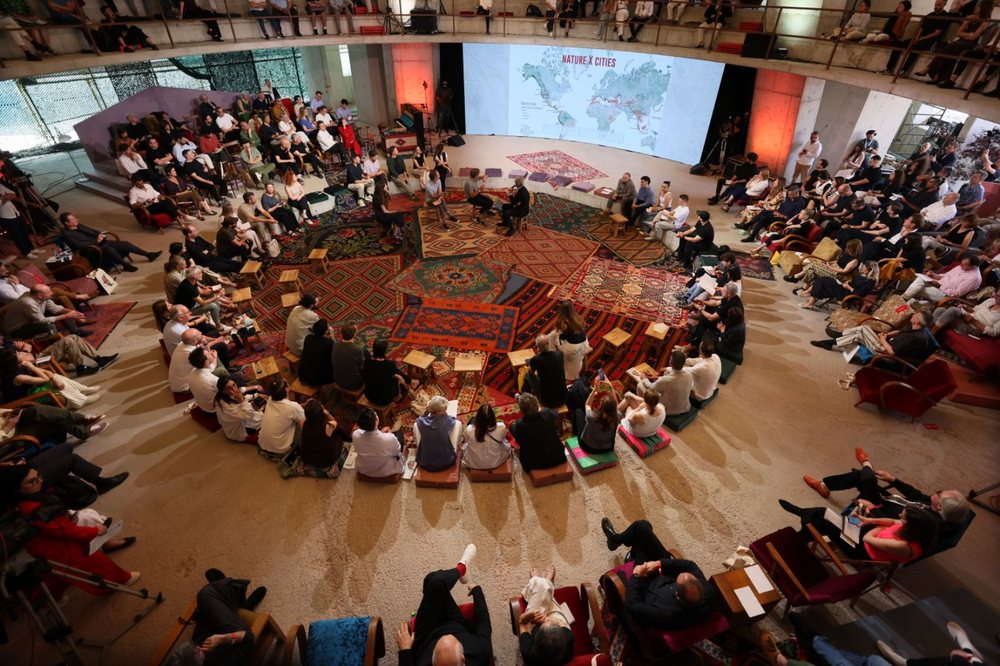
To legitimize his miracle of construction-tourism, Edi Rama concocted a festival in Tirana with the world's most famous architects, called "bread, heart and a little salt", from which he would declare that Albania now produces more architecture than all of Europe combined. But beneath the false facade of this miracle, there was a cocktail made with bread, blood, and a lot of cocaine.
SPAK's successive actions are confirming what Albanians saw every day with their own eyes. Towers, resorts, and strategic projects that, according to the government, would put Albania in the Tourism Champions League are increasingly proving to be a money laundering mechanism on an industrial scale.
In just one week, the Special Prosecution Office has seized over 700 million euros in wealth and assets suspected of having originated from drug trafficking. This is more than 3 percent of the entire national economy and to get an idea of what this means, just a comparison is enough. In the EU, authorities seize an average of 0.01 percent of GDP in criminal assets per year.
It is not known what the real extent of criminal money penetration is in the construction and entertainment sectors and how much of it SPAK will manage to test, but right now this sector resembles a sack of flour, the more you shake it, the more it yields. Meanwhile, Edi Rama's architectural festival with bread and heart is an insidious reproduction of the famous Havana conference at the Hotel Nacional.
The only difference between the two is that instead of Meyer Lansky, Lucky Luciano and Frank Costello, Edi Rama served the Albanians in Tirana the famous faces of the Boers, the Casamonts and the Winnie Masses. But the real architects, who were rebirthing Albania according to the prime minister's vision, were those who gathered on exotic Caribbean islands with high-ranking representatives of the Albanian government.
So a replication of the Batista-Lansky alliance right in the heart of Europe and 70 years later. Now Albania is paying the bill for this alliance.
First, the flood of criminal money and its conscious channeling into the construction sector has calcified entire segments of the economy, striking at the heart of its productivity and competitiveness.
The first mechanism of this shock was the exchange rate, where the unstoppable strengthening of the national currency has almost structurally bankrupted industry, agriculture, and all productive sectors, replacing them with non-tradable sectors.
Currently, Albania exports less than it did 5 years ago, and this is a dramatic indicator of the damage of the economic drug experiment, but not the only one.
In parallel, allowing the free circulation of dirty money has in one way or another damaged healthy parts of the economy, including honest businesses and even segments of the financial system, inflicting severe reputational damage on them and making them vulnerable to blackmail or legal penalties.
Today, hotels bearing the names of the world's most famous brands are being seized in Albania as derivatives of trafficking money, while the biggest concern remains the destructive effect of this model on institutions.
World experience has shown that rebuilding institutions infected by criminal money is a difficult and costly process. Their dimensions remain to be seen. But one thing is certain. The exhausting limits of the drug model have now come to the surface, thanks in part to SPAK's crackdowns.
So it's no wonder that the Visionary's architectural marvel quickly degenerated into open-pit towers across Tirana and ghost resorts on the shores of the Riviera.
At this point, where economic transition seems inevitable, the big question is; does the Albanian economy have the strength to quickly reorient itself by recovering the ruined manufacturing sector and the great reputational damage that the experiment with criminal money left behind?
Editorial
