Klodian Tomorri
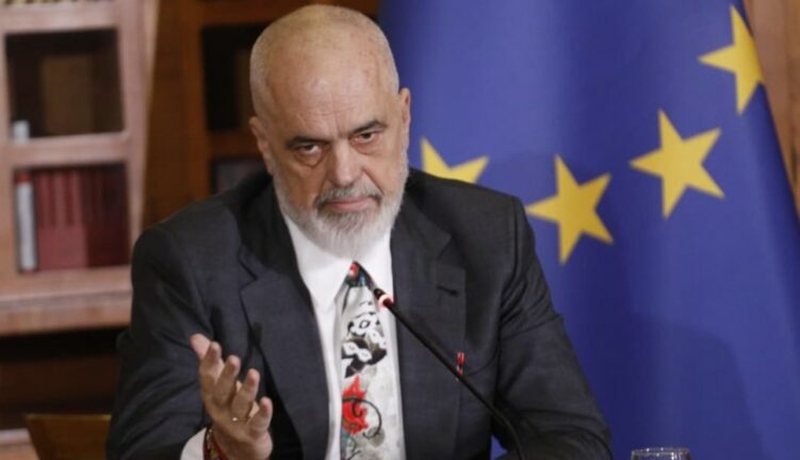
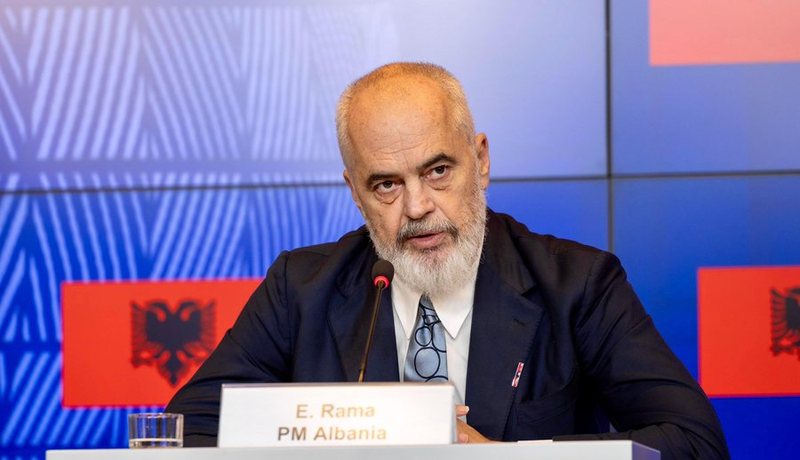
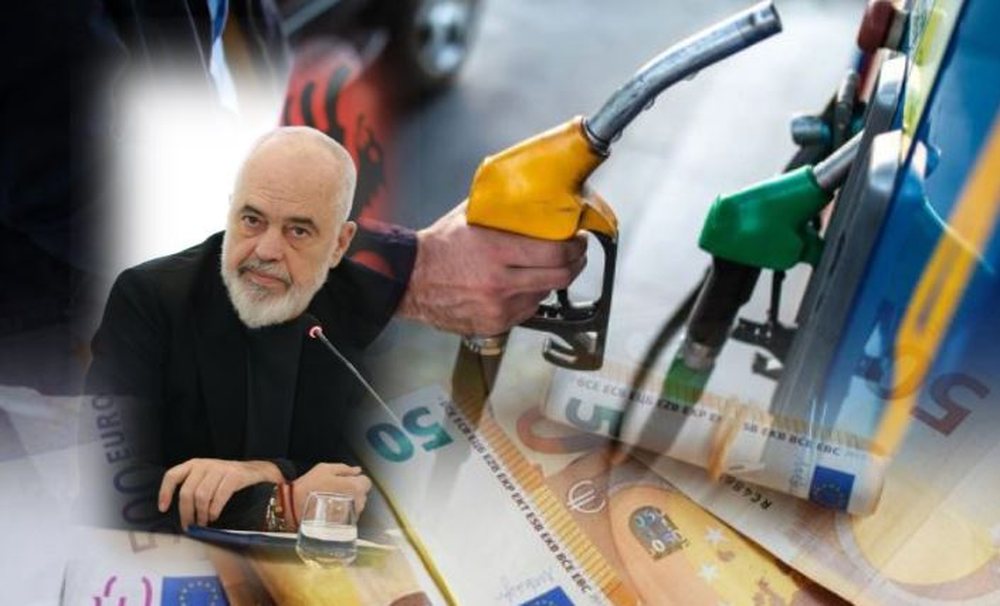
Faced with public pressure over the record price of oil and the heavy tax burden the government has imposed on him, Prime Minister Edi Rama retrieved from the archives an old tale that he has been telling Albanians for years: that oil taxes are high because the government has relieved citizens of vehicle taxes.
"We have done the math, if we remove the circulation tax from the price of oil, the price will drop, but everyone who has a vehicle will have to pay 4 times what they pay today, on average. Instead of charging everyone 4 times, we have thought that it would be better if those who spend more on oil pay more. In a way, those who burn more fuel are more polluting," Rama declared at the Assembly of Unit 7 in Tirana.
The prime minister usually gets angry with half-truths. But this oil tax song, which he sings every time he threatens fuel prices, is less than a quarter of the truth. The full truth is as follows.
In 2011, the government of the time completely reformatted the tax package levied on vehicles by removing three taxes. They were the domestic vehicle sales tax, the circulation tax, and the registration tax.
The first was calculated according to a formula based on the age of the vehicle, the cylinder capacity and the type of fuel. The circulation tax was 10 thousand lek per year for diesel cars and 7500 lek per year for gasoline cars. While the third tax, the registration tax, was 2400 lek per year.
To compensate for the revenue lost from the abolition of these three taxes, the government shifted the burden of taxation partly to fuel and partly to the annual registration of vehicles. More specifically, Ridvan Bode introduced a circulation tax of 7 lek per liter for diesel and 5 lek per liter for gasoline. Meanwhile, the registration tax was replaced by an annual tax on used vehicles, which is also calculated based on the age, engine power and type of fuel used by the vehicle.
For example, for a diesel vehicle with a 1900 cc engine, manufactured in 2016, the annual tax today is 6650 lek.
The government's reformatting of the tax package in 2011 was budget-neutral. The three taxes that were eliminated brought in about 80 million euros per year. The new ones that were introduced brought in the same amount. But what happened next?
In 2014, Edi Rama made his first fiscal package as prime minister of Albania. Under the pretext that the previous government had left behind a scorched earth situation in the state finances and with the public debt increasing, the government initially increased the circulation tax from 7 lek per liter to 17 lek per liter, equalizing gasoline at this level. As if that were not enough, a year later the tax was increased again from 17 to 27 lek per liter and together with the ad valorem effect of the VAT, it amounts to 32.4 lek per liter.
So the increase in the circulation tax was neither a burden shift nor a replacement for a tax removed elsewhere. It was a pure increase in taxes from the pocket of the prime minister and the government. And the increase from 7 lek to 27 lek per liter takes a full 200 million euros per year in taxes from Albanian citizens. Again for the prime minister's pocket.
This is the first part of the untruth that Edi Rama tells. The second part is the claim that other countries around have a vehicle turnover tax. This is an even bigger untruth. And in the era of artificial intelligence and the massive advancement of Information Technology, which the Prime Minister is so fond of, every citizen can easily verify it.
Just one question is enough; what is the average annual tax bill for a vehicle for x country in ChatGPT? The results are these;
North Macedonia 200 euros
Kosovo 250-350 euros
Albania 245-345 euros
Serbia 250-450 euros
But with information technology, the prime minister has been having a hard time getting a handle on the truth for some time now. Especially when he makes his subordinates homeless, who are now fighting with each other over whose villas should be left, since SPAK was seized in every resort.
Editorial