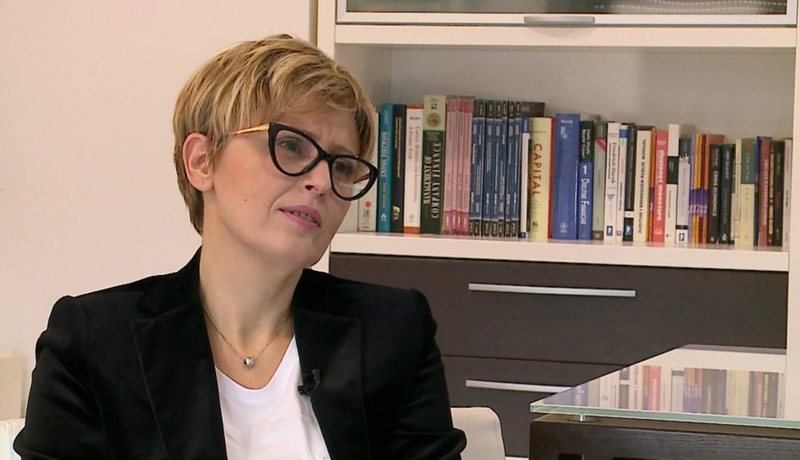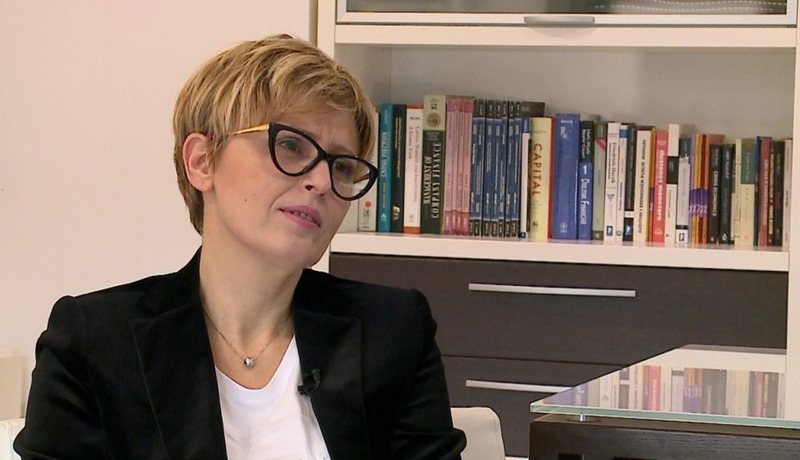
Irena Beqiraj
In 2025, the total flow of foreign direct investment reached 1.64 billion euros, an increase of 3.5% compared to 2024.
The structure of foreign direct investment is presented as follows:
• 51% of the total consists of profits generated by existing companies and reinvested. In other words, 51% comes as a result of the expansion of existing companies through profits generated locally.
• 31% consists of foreign investments in real estate.
• The remaining portion, about 18%, is invested in other sectors, such as financial intermediation, banking, and energy.
Although this high level was presented by the Prime Minister as a great economic achievement, it should be emphasized that foreign investments are neither a priori salvation nor sabotage for an economy. On the contrary, they are a tool that, when used properly, can bring about real and positive changes. However, if invested without increasing productivity, they can cause long-term damage to the economy.
To simplify the explanation a bit, I'm comparing it for a moment to the investment each of us makes in our child. Investing in the education and development of a child's skills creates the opportunity for the formation of a stable, productive, and independent individual.
Likewise, in an economy, when foreign direct investment flows into productive sectors such as manufacturing, industry, and information technology, it increases the productive capacity of the economy, as it creates jobs and transfers technology and knowledge, thus promoting sustainable economic growth.
Whereas, when we invest more in expensive clothes, phones, headphones, or toys for the child, undoubtedly in the short term both the parent and the child will feel good, but the long-term result may be "a spoiled slacker at home."
Such are investments in low-productivity sectors, such as construction, tourism, or real estate purchases by foreign individuals, which do not increase the productivity of the economy and do not transfer technology or knowledge. When foreign investments are made in sectors where jobs have low productivity and wages, or where the government offers public property and fiscal incentives, they leave the country almost empty-handed.
Can your child develop his skills faster and better than his peers, when only 18% of your investment goes to increasing his skills and 82% to appearance and entertainment? Regardless of the amount invested, when the division is like this, the result is known.
Does the Albanian economy need more construction, which we dress up in a tourist costume to beautify and sell as development, while adding casinos as "jewelry" to make it more profitable for investors?
Therefore, foreign direct investments, where 51% are the expansion of existing companies with profits generated in Albania and 31% are the purchases of housing by non-residents, are an indicator of the nature of non-productive investments that the Albanian economy attracts.
While these transactions are often seen as a sign that investors value the country as a promising and solid destination, unfortunately, by not increasing productivity, they also increase the risk of financial instability.
That said, foreign investment is a double-edged sword. If it is not used to acquire new knowledge, to build companies with workers who can compete globally, and who are able to advance in the value chain, it becomes a problem rather than a solution.
However, when invested in productive sectors and accompanied by realistic macro-protectionist policies, foreign investment is more than money. It becomes a bridge to higher productivity and better jobs — a way out of poverty.
So, when politicians want to impress you with foreign investment figures, don't be fooled. Their structure has value!
Editorial