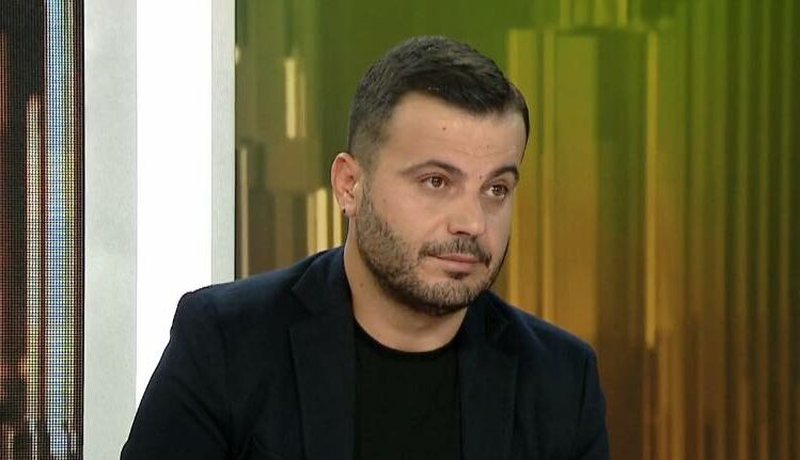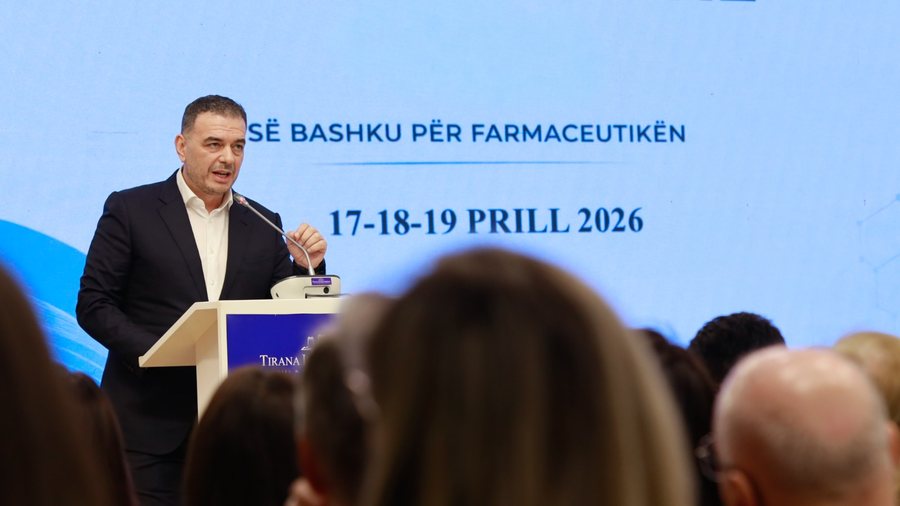
Dorian Sadiku
President of the Pharmaceutical Business Union
It's hard to talk about the pharmaceutical sector today without feeling like you're repeating the same old things. For years, we've been discussing the same issues, raising the same concerns, and proposing the same solutions. And yet, change remains slow, in some cases almost imperceptible.
But this time, the reflection does not come only from within the sector. It also comes from a broader moment. The Diaspora Summit, for example, was a stark reminder of a reality that we all know, but rarely articulate properly: our diaspora grows every year, while we continue to watch it from afar, without managing to offer it a system where it can return and truly contribute.
It was impossible not to be struck by nostalgia when I saw Egesta Lopçi on the panel – once a high school friend, today a doctor and nuclear medicine researcher, with hundreds of scientific articles and a level of knowledge that today flows elsewhere.
The thought that came naturally to me was simple: what would she do if she returned to Albania? And the answer was just as simple: nothing. Not for lack of will or ability, but because we have not yet built a system with solid foundations on which to build.
The same goes for those who have returned. There is real effort, there is will, but it often ends up trying to patch a system, not build it.
In this context, the pharmaceutical sector is a very clear reflection of this reality. After so many years, we continue to face the same basic problems.
The timelines remain a mystery. It is not known when prices are approved, when the list is indexed, when the new one is published. Decisions come at the last minute, creating chaos for patients, in the market, and causing losses for pharmacies and pharmaceutical businesses.
The reimbursement list methodology is another example of the lack of evolution. At a time when the pharmaceutical industry and health systems are changing rapidly around the world, we continue to operate almost the same way for two decades. The commission changes every year, but not the way the system works.
The sector's image has also been through difficult times. The recent protests showed a rare solidarity among pharmacists, but at the same time they also highlighted a serious problem: the tendency to lump everyone in one bag. In a market where there are audited and correct entities, generalization is unfair and damages trust.
At the same time, we continue to have contracts that are negotiated every year, at a time when technology now makes it possible to monitor every activity in real time. The full implementation of electronic prescription would make the market even more transparent, but we have not yet exploited this potential.
Drug prices and availability also remain a problem. Some changes have been made, but they are not enough. In many cases, pricing policies do not match market reality, directly affecting what citizens find – or do not find – in pharmacies.
All of this leads to a single question: when will we see real and lasting change?
This question becomes even more urgent in the context of European integration. This process is not simply a political objective. It is a profound transformation of the way the system functions, how the market is regulated, and how citizens are protected.
For the pharmaceutical sector, this means higher standards, greater transparency and clearer responsibilities. It means that the Albanian patient should have the same level of safety and access as every European citizen.
But at the current pace, we are still far from this reality. And this is not to create pessimism, but to be realistic: without a clear change in approach, we risk entering this process unprepared.
The moment is important, because work is being done to approximate European legislation. This is an opportunity that should not be missed. But to take advantage of it, real involvement of all actors is required - institutions, business and professionals.
A real dialogue is needed. Not formal, not sporadic, but continuous. A dialogue where problems are not relativized, but addressed. Where solutions are not postponed, but built.
Because without political will, any reform remains on paper. And without market involvement, any reform risks not working in practice.
Equally important is the responsibility of the sector itself. Integration is not something that happens to us from the outside. It is something that is built from within – in the way we operate, how we respect the rules and how we build trust.
At this point, cooperation between the Pharmaceutical Business Union and the Order of Pharmacists becomes essential. Only through real cooperation can commercial interest be balanced with professional ethics and the protection of public health be guaranteed.
A concrete step would be to create a joint technical table with institutions to discuss key issues of the sector – from contracts to legislation and the functioning of the system.
In the end, the choice is simple: either we build a real partnership to bring the sector towards European standards, or we continue to remain in place, leaving the patient to pay the cost of our delays.
The pharmaceutical sector has the capacity to meet this challenge. It has the people, the experience and the knowledge. What is missing is turning these capacities into joint and sustainable action.
Editorial