


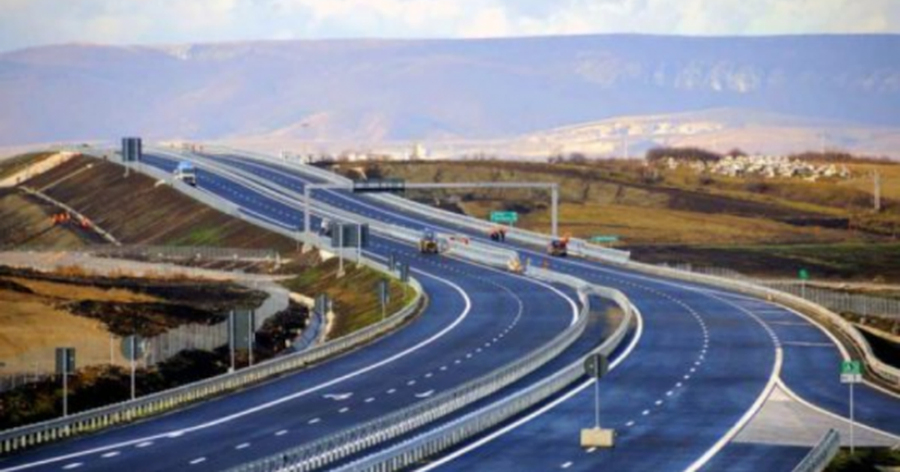
Albania will spend 7.9 billion euros on investments in transport infrastructure by 2030. According to the Transport Strategy approved by the government, this money will go towards the construction of railway lines and several important road axes, part of Corridor 8 or the other Adriatic-Ionian Corridor.
But what are the public projects that will be built?
According to the strategy, the Durrës-Prishtina railway is in first place. Scheduled to cost a full 750 million euros, the railway line that will connect Albania with Kosovo is not expected to be completed in 2030. This deadline seems very optimistic because work on the construction of the National Railway has not started on either side of it, neither in Albania nor in Kosovo, although both governments have committed that its construction will begin as soon as possible.
The second most expensive transport project in terms of cost is the road axis from Poçem in Fier to Memaliaj. Part of the Adriatic-Ionian Corridor, this road is expected to cost 597 million euros and is also expected to be completed by 2030.
The third most expensive project is another railway line. It concerns the rehabilitation of the Rrogozhina-Pogradec-Rrajce railway to the border with North Macedonia. This investment is scheduled to cost 541 million euros and is expected to be completed in 2032.
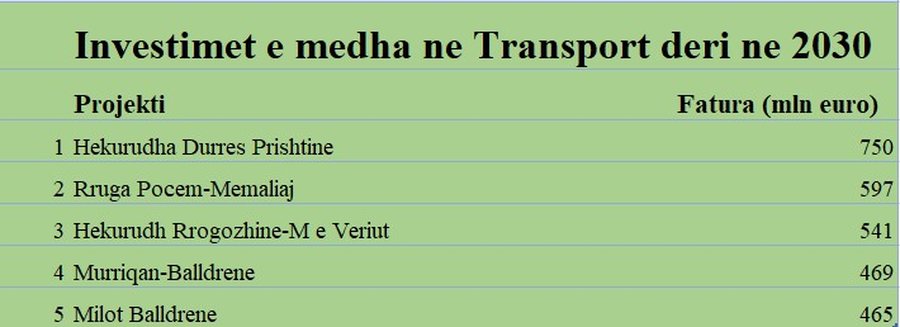
Two other Adriatic-Ionian Corridor projects, the Milot Balldrenë highway, which has already been tendered and the winner is expected to be announced, and the next extension to Murriqan, are in fourth and fifth place respectively with a total cost of over 1 billion euros.
The government has decided that part of the cost of building road axes will not be borne by the state budget, but will be financed by private parties through concessions. While in the case of railway lines, the sources of financing will mainly be funds from the European Union or development banks.
However, in one form or another, Albanians will have to pay billions of euros over the coming years for infrastructure investments.
Editorial
