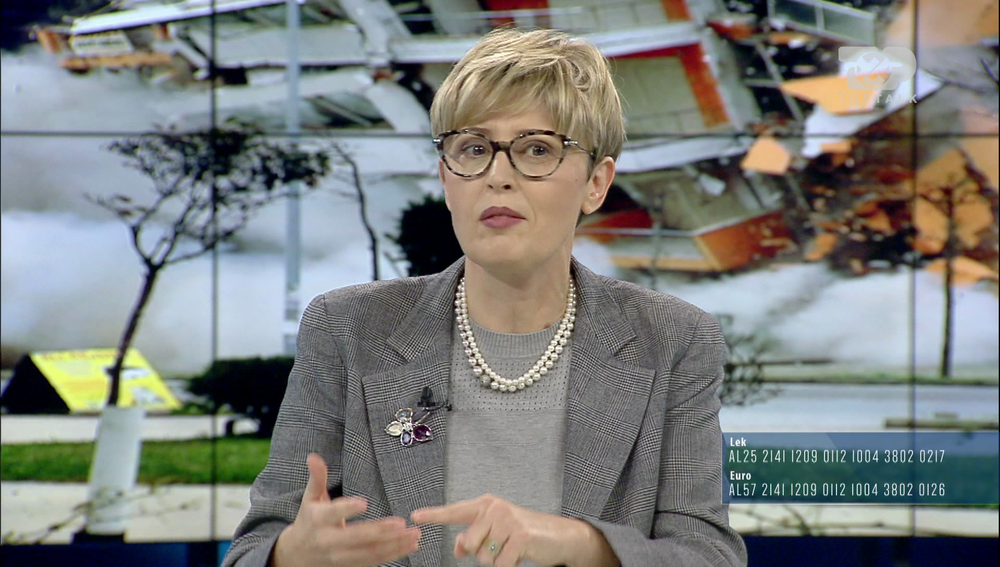
Irena Beqiraj
If I were to define in one phrase the summary of the news I have read during the months of July, starting from the group dismissals of the municipality directors, the transfer of construction permits over 6 floors to the Prime Minister, the signing of illegal contracts out of fear of Erion Velia, and the dismissal of a police officer by the Prime Minister, it would be an “Unprecedented Concentration of Power or Authority”.
While individual corruption is present in all societies, systemic corruption is installed in societies where two conditions are met:
1) There is a high concentration of power or authority in one person or a small group of individuals who are placed in positions to adapt the rules according to their interests and to rule above the law: even
2) When this concentration of power in social culture is accepted as a normal and tolerable situation.
Unfortunately, state offices are being “populated” by powerless managers and employees who consider it normal and acceptable for power to be distributed unequally and for a more powerful person to decide even on matters that are entirely within their discretion and responsibility.
For example, the Mayor of Vlora accepts that the Prime Minister, in the eyes of the parliament, should request the resignation of all the directors with whom he works, even though according to the law, evaluating their work is his sole competence.
The director of TOB signs a contract even though she knows it is illegal because the wife of a powerful man is asking for it. The same thing happens in the municipality of Fier.
Clearly, decision-making has been and continues to be concentrated in the hands of one man and a close group around him, and everyone else without exception has been and is there to execute orders without any resistance and to shake the door.
The distance created with the power or authority that every official must exercise according to the position and the law, strengthens the state power concentrated in a few hands by increasing the incentives of other individuals to engage in proactive or defensive corruption.
Meanwhile, the installation of this exemplary culture of obedience to power and not to the law is one of the greatest obstacles to change. It is not only reinforcing certain behaviors of members of society but over time is being accepted as normal in an unconscious way.
The acceptance by the mayors of the municipalities that the Prime Minister exercises their competences even in staff matters (an old habit of the latter), or the issuance of illegal contracts "out of fear" shows that our "democratic" state is a system that has standardized the behavior of officials and the interpretation of the law by obeying the power of the government and hoping for protection from it. Institutions have been adapted according to powerful individuals instead of the interests of society.
By giving up the power and authority that the law gives them, by not daring to say No: The Mayor, the Director of TOB, the staff of the municipalities of Fier or Tirana, the Minister, have accepted a voice as normal, that their actions and inactions be guided only by one objective: To avoid being on the wrong side of the redistribution of the goods that come from power, while also hoping for protection from it!
So, increasing the power of "democratic" government is the only successful socialist policy that has finally installed systemic corruption in Albania.
To understand this, there is no need for Parliamentary Anti-Corruption Committees or anti-corruption units; it is enough to read the news from July.