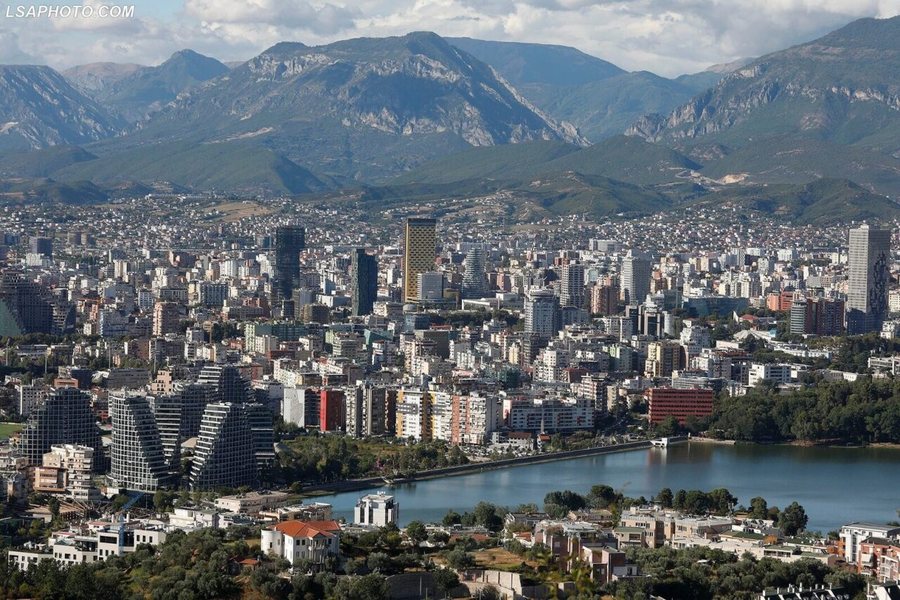
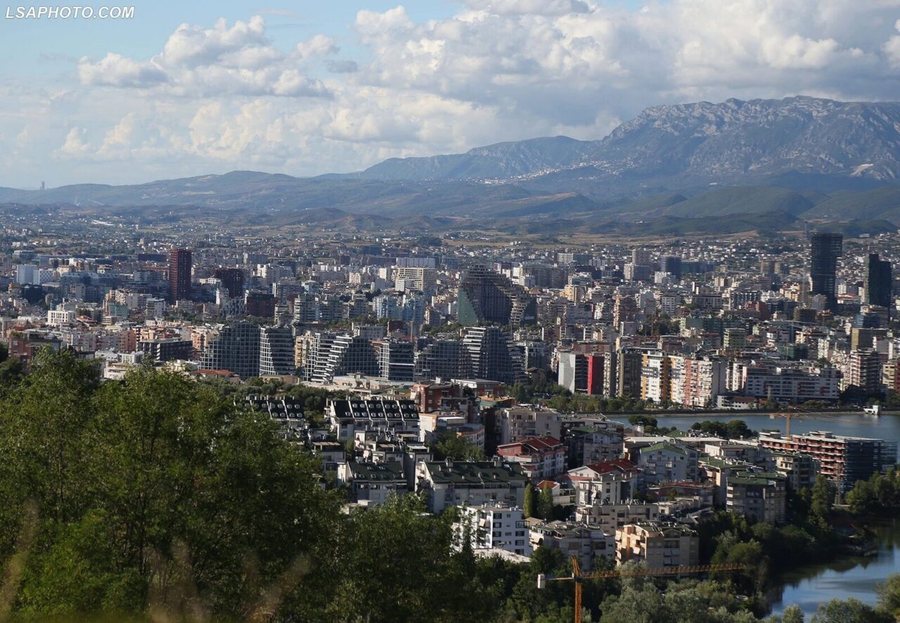
The towers that rise one after another, often without transparency and with little competition, show that architecture has become a tool for privilege where famous foreign names are involved in scandals and investigations. While the city loses greenery and public spaces, a concrete forest is destroying the urban and historical identity of the Albanian capital.
From Zaho Toska
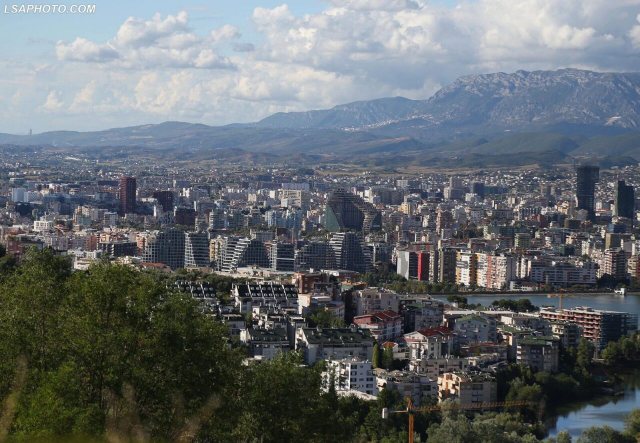
Every day, new tower silhouettes are born on the horizon of Tirana. The city, once surrounded by green hills, is becoming breathless amidst a concrete forest that is expanding without stopping. Behind the glass facades and modern designs hide decisions, agreements and interests that are rarely published and even less often analyzed.
"Albania produces more architecture than the rest of Europe," Prime Minister Edi Rama proudly declared during the Architecture Festival, which brought together hundreds of architects from around the world under the motto "Bread & Heart", held in Albania from June 5 to 7, 2025.
Data collected by the “shteg.org” platform shows that Albania has the highest level of contribution of the construction sector in Europe. While in the European Union construction represents an average of 5.6% of gross added value, in Albania this figure reaches 14.4%, according to Eurostat. In 2024 alone, according to data from INSTAT, Albanian authorities granted permits for the construction of 494 buildings, an increase from 411 in 2023, expanding the construction area to almost 2.5 million square meters.
During the period 2020–2024, over 11 million square meters of new construction have been approved, of which 8 million were completed in Tirana alone. The value of these investments, according to INSTAT, amounts to 485 billion lek, or about 4.8 billion euros. But behind this vigorous activity, a dark side is hidden. The US Department of State (DASH), in the Report on the International Narcotics Control Strategy 2025, warns that Albanian criminal groups are using the domestic economy, especially construction, to launder money gained from criminal activity.
According to the report: “Criminals launder proceeds through real estate purchases, construction projects, virtual assets, and business development.”
Local experts also raise the alarm that the construction sector has become an oasis for money laundering. According to a report by the Global Initiative (2022), in Albania, it is suspected that around 666 million euros have been laundered in the construction sector alone.
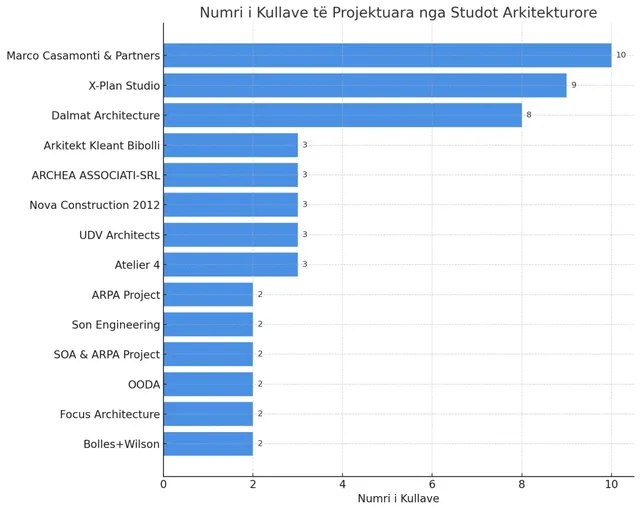
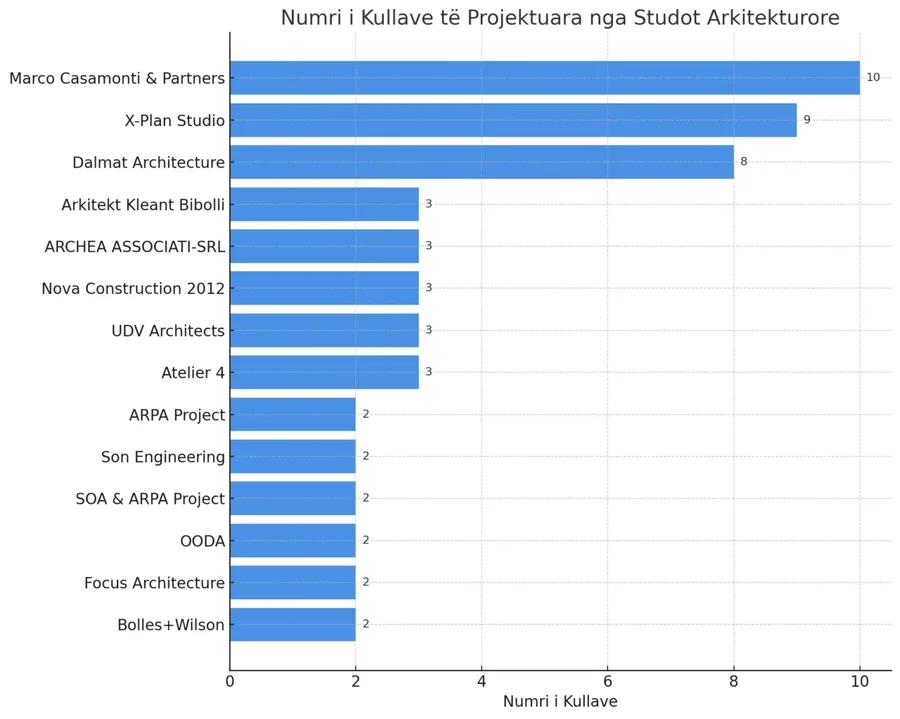
But beyond the construction boom and the questions raised by international reports and experts, data from “shteg.org” reveals that a small number of architectural studios dominate the entire sector. Over 200 buildings built in Tirana were designed by a narrow circle of studios, which raises concerns about competition and diversity in architecture.
From “Vertical Forest” to “Urban Concrete”
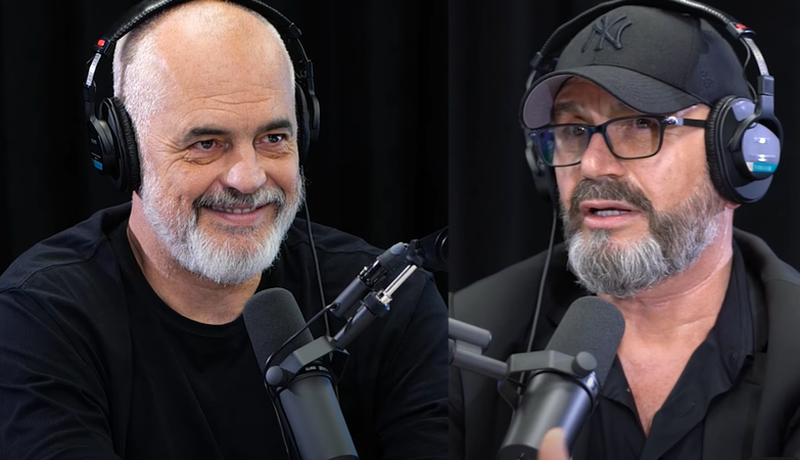
In the spring of 2016, a group of journalists, accompanied by the Mayor of Tirana, Erion Veliaj, traveled to northern Italy to visit the “Vertical Forest” in Milan, a project by renowned architect Stefano Boeri. This visit was not a coincidence.
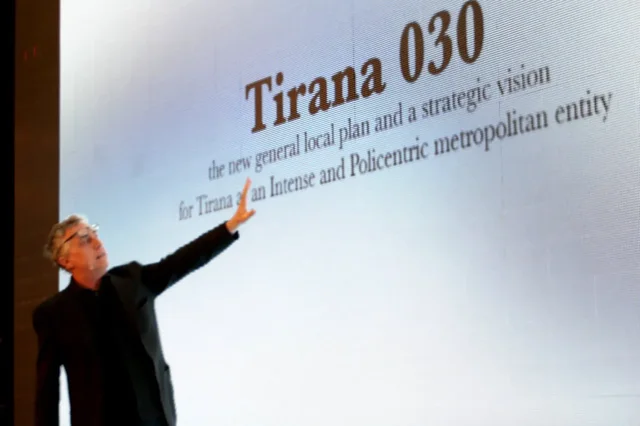
That same year, Boeri was contracted by the Municipality of Tirana to draft the General Local Plan “Tirana 2030”, which included the vision of the “Orbital Forest”, a city covered in greenery, which would curb uncontrolled construction and create a balance between man and nature.
However, although this plan outlined clear construction restrictions, Boeri himself has designed buildings that exceed these limits, such as the Cube Block, the West Residence Block, and the Vertical Forest – all approved by the National Territorial Council, headed by the Prime Minister.
Boeri became so popular in the Albanian market that he opened a branch of his studio in Tirana. The office, part of the Milan-based company, provides services on public and private projects in Albania. In 2022 alone, this office reported revenues of 5.7 million euros.
Studio Boeri, in collaboration with other firms, has benefited from over 840 thousand euros from public contracts, including the design of the Tirana Riverside neighborhood, the construction of three public schools and the intervention in the Durrës Archaeological Park.
Tirana Riverside, a model neighborhood along the river, gained the status of a reconstruction project after the 2019 earthquake, which allowed authorities to bypass standard tendering procedures and entrust the project directly to Boeri's studio.
In August 2023, Studio Boeri won the competition to design a tower near the New Boulevard, in collaboration with Son Engineering, while a few months later it also won a 150 thousand euro tender for the design of the Road Transport Directorate building.
For the Italian architect, Albania has become a “golden land”, where he has carried out most of the projects since the Socialists came to power. Boeri was one of the 32 architects invited to Tirana in the spring of 2014, when Edi Rama, newly appointed Prime Minister, launched the initiative to build a new city, “Tirana of the Next Generation”.
The guests came with ideas, experience and a thirst to build. Today, their projects are no longer on paper: they have become reality. Towers that touch the sky, futuristic structures and numerous constructions have changed not only the physiognomy of Tirana, but also its spirit.
Public spaces have shrunk, while new buildings have been erected where monuments, historical buildings, and cultural heritage once stood. While some parts of society see this development as modernization, others experience it as the undoing of urban memory.
Architects under investigation
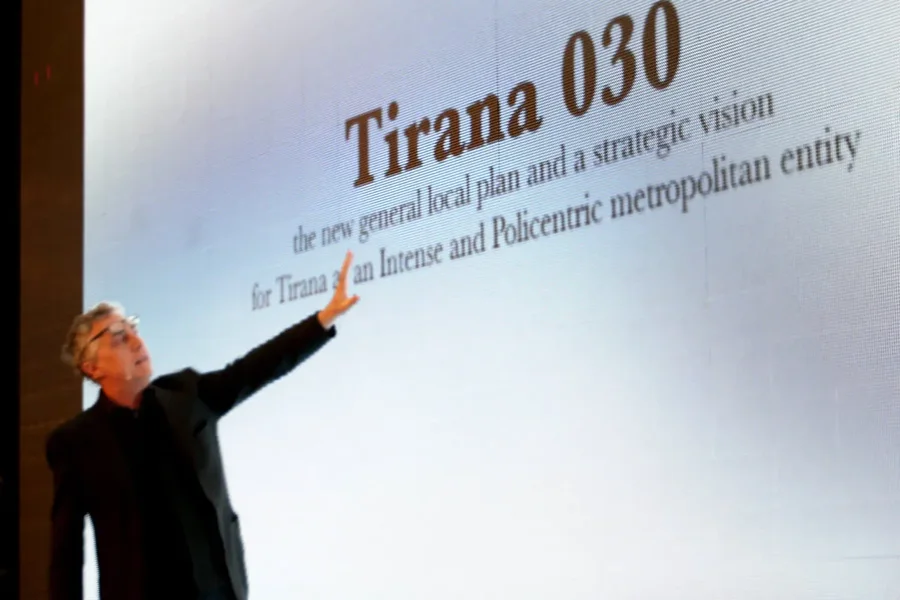
Stefano Boeri
“I'm in Tirana. I'll be back on Friday.” The short message was sent on March 1, 2022. Italian architect Stefano Boeri was informing his old friend Paolo Tamburelli that he was in the Albanian capital.
Tamburelli soon returned with a specific request. He wanted Boeri's help in involving his studio "BAUKUH" in a 3.5 million euro project to build a university campus in Tirana.
A day later, Boer's phone rang again. It was Tamburelli on the other end. After they finished talking, the Italian architect got the details of the project.
Tamburelli asks Boeri to meet with Arbi, or the mayor, and emphasize the importance of involving BAUKUH as an overseer to guarantee the quality of the project.
In the messages that would later become part of the Milan Prosecutor's Office file, the project could be postponed and carried out "informally".
Against the backdrop of these conversations, a wide-ranging investigation was being conducted in Italy by the Milan Prosecutor's Office.
In 2024, the Milan Prosecutor's Office requested house arrest for Stefano Boeri and his colleague Cino Zucchi, accused of corruption and abuse of office in connection with the European Library of Information and Culture (BEIC) competition.
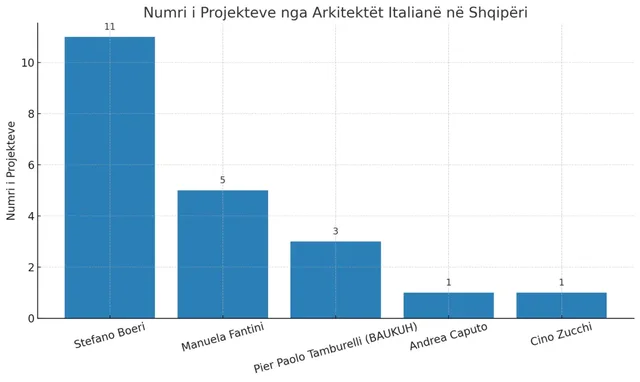
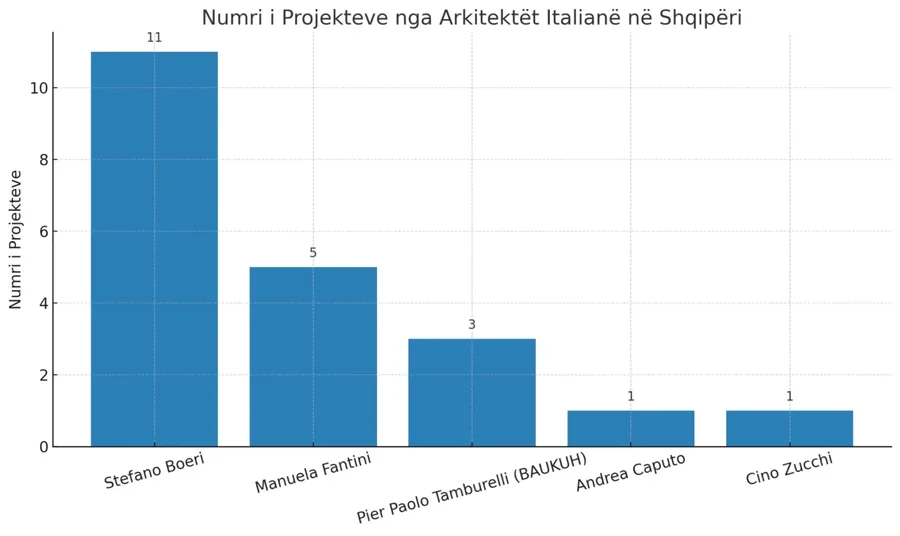
The prosecution's file included 70 people under investigation, among them: Stefano Boeri, Paolo Tamburelli, Manuela Fantini, Cino Zucchi, Andrea Caputo. Most of them had participated in projects in Albania. Only two of them, Floridi and Lunati, had no connection to our country.
The Italian architect is accused of manipulating one of the most important tenders of recent years: the construction of the BEIC, worth over 8.6 million euros.
Boeri was part of the commission that would select the winning project. He and his colleague, Cino Zucchi, had officially declared that they had no conflict of interest. But investigations revealed the opposite. They had direct contacts with one of the competing groups: ONISTESTUDIO BAUKUH SCE, precisely where Paolo Tamburelli was also a member.
The project was supposed to be anonymous, but documented messages and meetings showed that Boeri and Zucchi knew well which project they should support. Beyond professional connections, they had common academic, financial, and personal interests with the architects presenting that project.
On March 3, Boeri wrote to his friend: "I spoke to Arbi. We'll call you this afternoon."
At the time when Tamburelli sought Boeri's help for the university campus, Arbian Mazniku was still deputy mayor. He enthusiastically presented plans for the construction of the campus in the "Student City" area.
The Tirana University Campus has always been part of electoral promises, from 2015 when it was first floated as an idea, until February 2025, when the Minister of Education, Ogerta Manastirliu, promised that work would begin very soon at an inauguration ceremony for two dormitory buildings in the student city. To this day, there is nothing clear about this project, except for promises from the institutions.
The investigation and wiretapping of Boer also brings information regarding his activity in Albania.
Stefano Boeri, as head of the bid evaluation committee, announced the winner of the project, the group of architect Manuela Fantini.
The latter, with the SCE Project studio, has collaborated with Stefano Boeri on the Blloku Residence, Blloku Cube, Tirana Riverside and Vertical Forest projects. The parties will also collaborate on the construction of the General Directorate of Transport Building, where Boeri, according to the file, paid 12 thousand euros to Fantini just for collaborating on this project.
The Milan prosecutor's office requested house arrest for Boeri and his architect friends in January of this year.
The court rejected the prosecution's request, initially ruling out house arrest, but imposed milder measures for the 68-year-old in February. The architect is not allowed to participate in public competitions or be part of juries that award projects for a year. "I am very happy that house arrest was not accepted and I can continue my work as an architect and the projects I have," the Italian told the media in his country after the decision by the Milan Court.
Despite the initial accusations, Boeri appeared in Tirana at the “Bread and Heart” architecture festival. He gave a long speech explaining why he considered Tirana an “urban miracle.”
And while in Tirana he spoke to the audience about "The Morphology of a Vertical Forest", in Milan he was involved in another investigation by local authorities.
He was investigated by the Milan Prosecutor's Office for direct influence and pressure on the approval committees for his "Botanical Tower" project, part of the "Pirellino" dossier.
The former municipal palace was purchased by the construction entrepreneur, Manfredi Catella, and was designed to be transformed according to Boeri's idea into the "Botanical Tower".
The Landscape Commission in June 2023 rejected the project; according to them, it was too burdensome and unacceptable.
After the commission rejected the project, Boeri and entrepreneur Catella launched direct pressure on local officials and commission members.
The Italian prosecution documented numerous communications, including a message that Boeri sent to Milan's mayor, Giuseppe Sala: "Take it as a warning for tomorrow."
A day later, the commission changed its position and gave its approval. The Milan prosecutor's office considers this as open pressure and has taken a positive approach to the prosecution.
Boeri has denied the allegations, saying he is convinced that his company acted within the rules.
The prosecutor's office has requested the arrest of 6 people suspected of corruption in the granting of building permits in Milan. Among the main names involved, in addition to the architect, is the mayor of Milan, Giuseppe Sala.
It's not just Boeri...
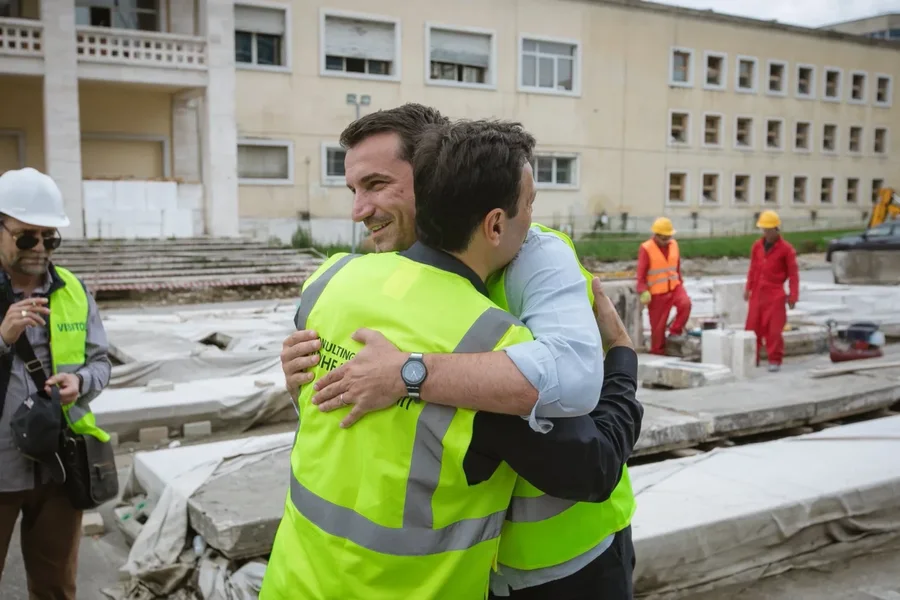
Mayor of Tirana Erion Veliaj and Marco Casamonti
The architect of the 10 towers that have captured the skies of Tirana, Marco Casamonti, also has problems with Italian justice.
Founder of the international studio Archea Associati, he is involved in several criminal investigations in Italy related to corruption and tender manipulation. In Florence, Casamonti was arrested as part of an investigation into the manipulation of a tender procured by the Municipality of Terranova Bracciolini (Arezzo), for a renovation project worth 98 thousand euros.
According to the prosecution, there is a suspicion that Casamonti and former municipal councilor Gianni Biagi intervened to favor the selection of professionals close to the Ligresti group in the urbanization project of the Castle of Florence, a property owned by the Fondiaria-Sai company.
The investigations, led by prosecutor Giuseppe Quattrocchi, have also involved public officials and other professionals. For Casamonti, authorities have raised concerns about the risk of reoffending.
Despite accusations in his country, Marco Casamonti has been a central figure in urban developments in Albania over the last decade.
He entered the Albanian market with the Forever Green tower project, located opposite the Orthodox Church in Tirana, and then designed the Air Albania stadium.
The latter was built by the Albstar company, which financed the entire project in exchange for the right to build a multi-story tower within the stadium complex.
At that time, there was a great debate in Albania regarding the demolition of the old building, which was part of the ensemble of Bosio, the Italian architect who designed a series of buildings in the city center during the fascist occupation, declared a "cultural monument".
Since 2016, through the Archea Albania studio, Casamonti has designed a series of major projects in both the public and private sectors. He has won contracts through direct negotiation procedures, including the preparation of a detailed local plan for the Kombinat area worth 200 thousand euros, and was announced the winner of the tender for the Vlora airport air master plan in collaboration with an Albanian firm.
Casamonti is the author of some of the largest buildings in Tirana. A 25-story tower on Liman Kaba Street, with a building permit issued on August 1, 2023, with investor Unico Construction, bears his signature. Also, a 12-story hotel in the former Blloku area and a 30-story tower in the Don Bosko neighborhood, projects of businessman Lefter Sota, were designed by the Italian architect.
Two other high-rise towers in Tirana, with 56 and 44 floors respectively, on Bulevardi e Ri and Bulevardi “Gjergj Fishta”, have also been designed by his studio, while six buildings in the Artificial Lake area, near the Mak Albania hotel, are under construction.
The intensive participation of Casamonti's studio in the urban transformation of Tirana has sparked debate and public concern, especially due to the fact that his projects have influenced the change of the city's historical and urban landscape.
The power of foreign architects
Every new street, every boulevard, and every square in Tirana today is associated with foreign architectural firms that dominate the urban scene.
The city has become an open ground for international studios, which in their own countries operate with very strict professional standards, but in Albania have special access and are often included in non-compete contracts.
This policy of involving foreign architects began with Edi Rama as mayor. The Urban Plan of Tirana, two decades ago, was determined through a competition in 2003, under his coordination.
The winning design was announced by the French team Architecture – Studio, while the Germans Bolles & Wilson and the Belgian firm 51N4E also competed.
In the two decades that followed, the two foreign studios were involved in the most important construction projects in the country.
The Belgian firm 51N4E has played a key role in the design and supervision of Skanderbeg Square, the Center for Openness and Dialogue at the Prime Minister’s Office, and in the development of several areas of Tirana, working with the Albanian Development Fund. Most recently, it was awarded the “Masterplan for the Niko Dovana Stadium Sports Complex” in Durrës, through a non-competitive negotiation procedure, with a contract worth 440 thousand euros.
Also, 51N4E has previously designed the Lana River, the Noka block, the TID tower where the Maritim Plaza hotel is located, as well as the Book Building near the Clock Tower, a first-category cultural monument.
Although the company's Tirana branch was founded in 2008 and was initially not very active, its revenues began to increase significantly from 2013, reaching 100 thousand euros. In recent years, average collections have reached over 500 thousand euros, while in 2022, 51N4E recorded 910 thousand euros in revenue and 330 thousand euros in profit after taxes.
In total, over the last 10 years, the Belgian firm has generated 5.3 million euros in revenue and 1.8 million euros in net profit.
German studio Bolles & Wilson has intervened in the city of Korça, implementing projects such as the Old Bazaar and the public library. Despite positive reviews for quality, these projects have resulted in high costs and no competition.
She has also won projects under the umbrella of Urban Renaissance, which were in the portfolio of Deputy Prime Minister Niko Peleshi during 2015-2017.
Bolles & Wilson has received two contracts from the Albanian Development Fund, one through non-competitive negotiation and the other as the winner, despite offering the highest price. The studio is the author of the 33-story addition next to the Tirana Hotel and a 27-story building on Gramoz Pashko Street.
Dutch MVRDV has contributed to the transformation of the Tirana Pyramid in collaboration with AADF, where the lead architect is Winnie Mass.
Mass first visited Albania in the years when Edi Rama started painting the facades of buildings as mayor. In 2008, he drafted the plan for Skanderbeg Square, a project financed by the municipality and the government of Kuwait, but which was not implemented due to political opposition.
In 2014, Mass returned and has since been the author of many private projects and the plan for the restoration of the Pyramid, a project supported by the Albanian-American Development Fund. In 2018, MVRDV was awarded the contract for the restoration of the mausoleum built in honor of the dictator Enver Hoxha.
The goal was for the building to be open to the public and serve as a training center in technology and innovation for young people.
The project was implemented by the local company Fusha, while the works were subject to public procurement rules, as part of the funding came from the state budget.
MVRDV is also involved in the construction of Down Town One, one of the tallest buildings in the capital, for Kastrati Construction. Initially, the project envisaged a 37-story building for residences and offices, but additional floors were later added for a hotel.
Another Dutch project is the Skanderbeg Tower, near the Tirana Hotel, designed with elements that honor the national hero.
The company previously worked on the Toptani shopping center and the initial project of the towers at the Artificial Lake, the latter project that was not realized according to their idea.
In 2010, Danish architect Bjarke Ingels, head of the international studio BIG, visited Albania and designed the Museum of Religious Tolerance, an idea that was not realized due to political clashes between the municipality and the government.
He returned in 2017 and was contracted by the Fusha company to design the National Theater. The project was opposed by artists, activists, international organizations, and opposition parties, while the construction procedure was considered predetermined.
The theater collapsed on May 17, 2020, at the height of the Covid-19 pandemic, and the municipality opened a tender for its reconstruction with the same design, where the winners were A&E Engineering and FM Ingegneria, with a contract of 720 thousand euros.
Many of the large buildings are designed by foreign studios, which creates problems in urban planning, as they do not sufficiently incorporate local culture and terrain.
Engineering Luljeta Bozo says she does not agree that most major projects should be given only to foreign studios, as they do not know the history and context like Albanians.
"I do not agree that most large projects should be realized and won by foreign studios. We have very good designers, architects and engineers. Of course, for very tall towers and giant projects there will be collaborations between foreign and Albanian studios, but they should not be only foreigners. They cannot know the history, relief and context as Albanians do," says construction engineer Luljeta Bozo, for "shteg.org".
Eduart Ndoci, a real estate agency manager, says the market is no longer optimal, prices have increased significantly, and this has created difficulties for buyers. He does not rule out that the influence of foreign architectural studios could be an additional factor.
"The market is not the best possible, there have been many problems. Prices have increased a lot and of course there have been difficulties for people to buy entrances. I can't say for sure if foreign architectural studios have also had an impact, but I think this could be the reason," says Eduart Ndoci.