cAPITAL
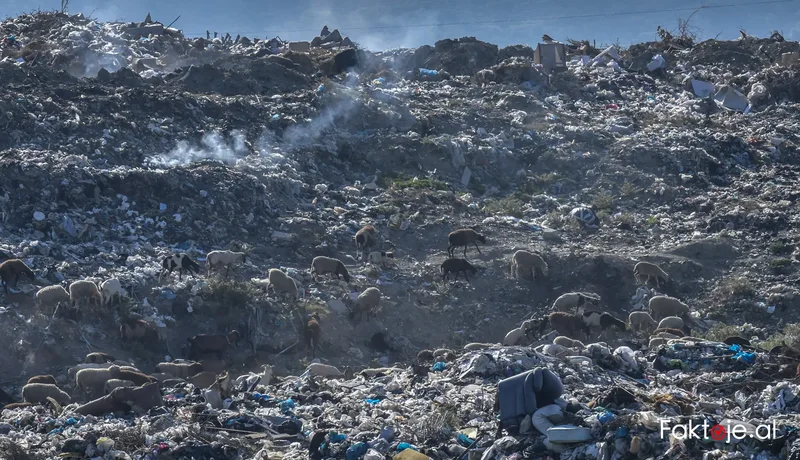
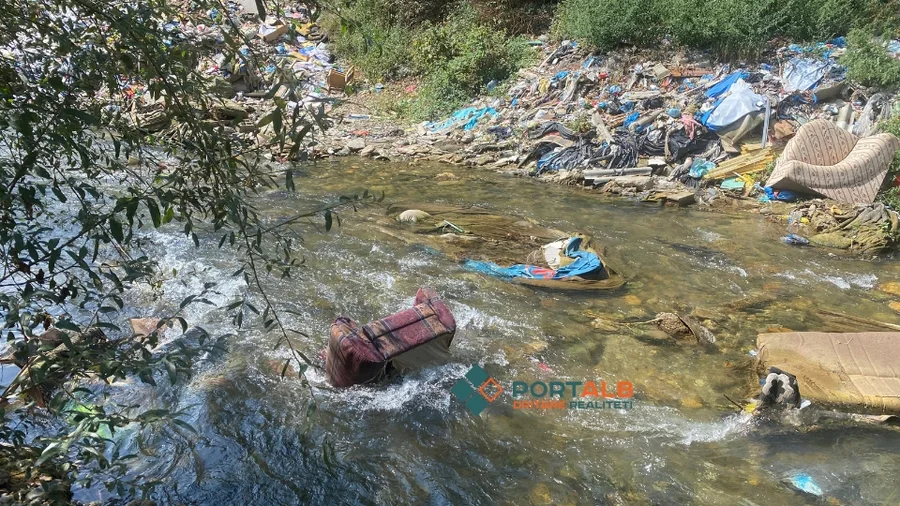
The Shkumbin River, one of Albania’s most important rivers, has become a dumping ground for plastic waste, endangering not only its rich ecosystem, but also the health of surrounding communities and the economic potential of the area. The truth is that plastic, with its slow decomposition, represents not only an environmental crisis, but also a health crisis with far-reaching health consequences.
Plastic waste in the Shkumbin River is causing major damage to biodiversity. The river, once a habitat populated by various fish species, is now facing the risk of extinction of these species due to pollution. The plastic, which breaks down into microplastics, is ingested by other aquatic species and organisms.
On the other hand, the high level of plastic waste pollution along the Shkumbin River is currently directly affecting water quality, making it unsuitable for various uses, including irrigation.
Water with microplastics penetrates through all agricultural products, or aquatic species, that grow in the area where this waste is deposited. Consequently, through the food we get from both land products and from living species in the river or sea, where this waste is discharged and deposited, microplastics end up inside our bodies.
That microplastic, which is already found in the blood and vital organs, poses a major risk to public health, severely damaging our organs or causing other long-term health problems. In short, a "time mine" for the health of Albanians, which is not visible, not seen, grows slowly, but can explode at any moment and even cause fatalities.
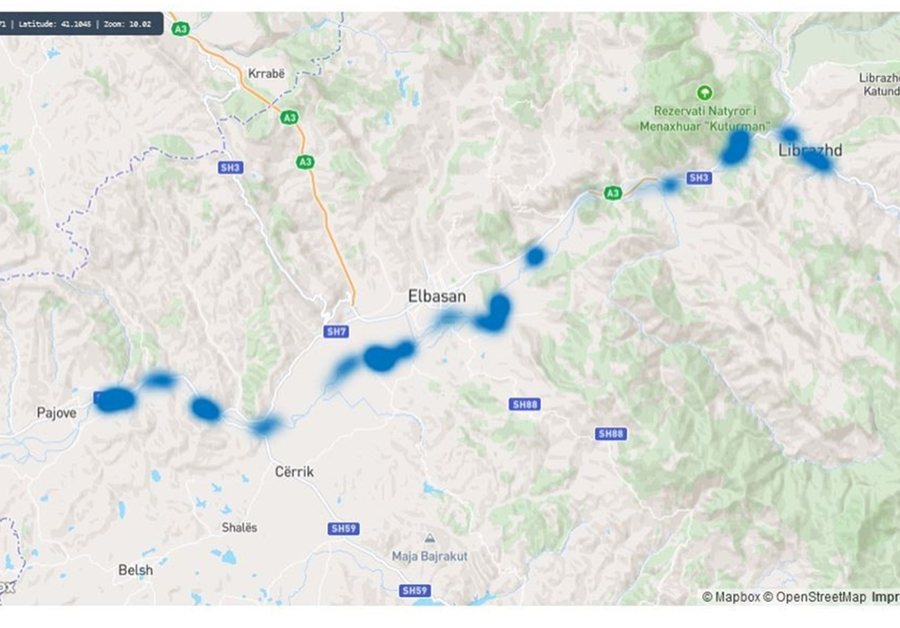
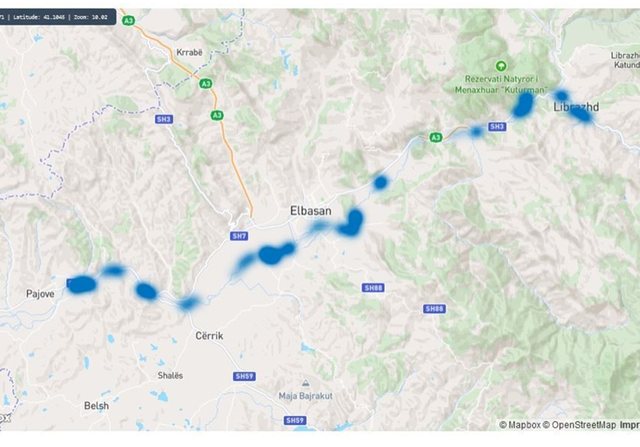
Map of pollution hotspots in Shkumbi
To raise awareness among the central government, local authorities, and communities in the areas surrounding the Shkumbin River, within the framework of the BeMed+ project, INCA (Institute for Nature Conservation in Albania), one of the largest environmental protection organizations, is finalizing the mapping of critical plastic pollution hotspots along the Shkumbin basin, providing detailed data on possible interventions that can be implemented to stop this degradation of nature.
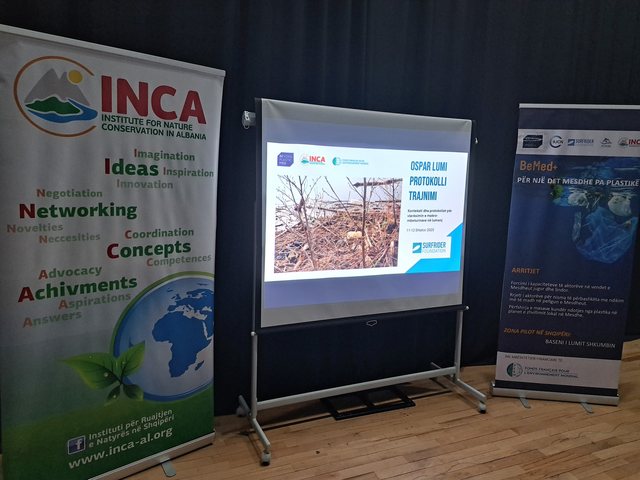
The project led by INCA, in collaboration with Surfrider Foundation Europe and other international partners, focuses on engaging stakeholders and developing strategies to reduce plastic in this environment. For this reason, from 4-6 June 2025, INCA organized meetings with key stakeholders from the tourism sector, the HoReCa industry and local institutions in Elbasan and Librazhd.
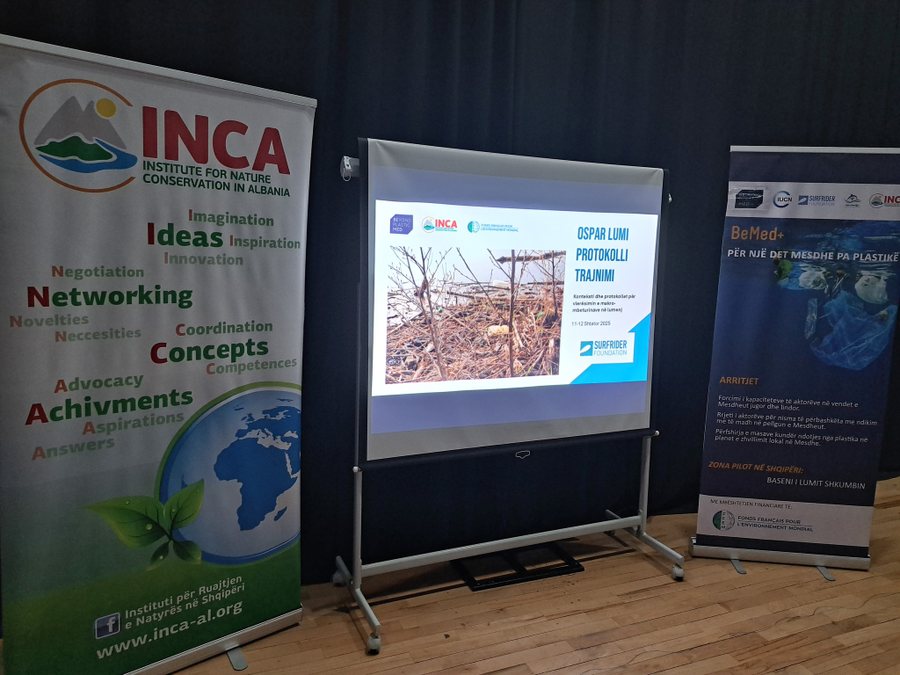
These meetings included representatives from the Local Tourism Agency, the National Rafting Federation, local businesses such as Hotel Imperial Elbasan and Café HANA, as well as representatives from the Ministry of Tourism and Environment. The Municipality of Elbasan and the Ministry have expressed strong support for the project, increasing its credibility. Furthermore, INCA has collaborated with the EU Delegation in Tirana to develop an action plan seminar, scheduled for November 2025, where concrete strategies for reducing plastic pollution will be discussed.
One of INCA’s main achievements is the finalization of a study on plastic flows along the Shkumbin basin. This study, similar to the one conducted in Monastir, Tunisia, identifies critical pollution points and proposes targeted actions for the tourism, HoReCa and waste management sectors. INCA has also established a collaboration agreement with the University of Tirana, where three master’s students are analyzing plastic dependency and transition scenarios for its reduction in these sectors.
In a second phase of the BeMed+ project, planned for 2026, the focus will be on implementing an action plan to reduce plastic pollution. This plan will be based on the findings of the study and will include measures such as improving recycling infrastructure, raising community awareness and promoting sustainable alternatives to single-use plastics.
In conclusion, plastic pollution in the Shkumbin River poses a serious threat to the environment, water quality and the health of Albanians. With around 500 tons of waste dumped annually in the surrounding areas and a significant economic impact, the situation requires urgent action. INCA’s efforts, through the BeMed+ project, offer at least an attempt and a hope for improvement, engaging stakeholders to intervene in this increasingly alarming situation.
Only institutional action can stop the degradation of nature, but in order to move from theory to practical action, everything depends on strong cooperation between government, communities and the private sector, as well as public awareness to reduce plastic consumption and promote a cleaner and more sustainable environment.
Editorial