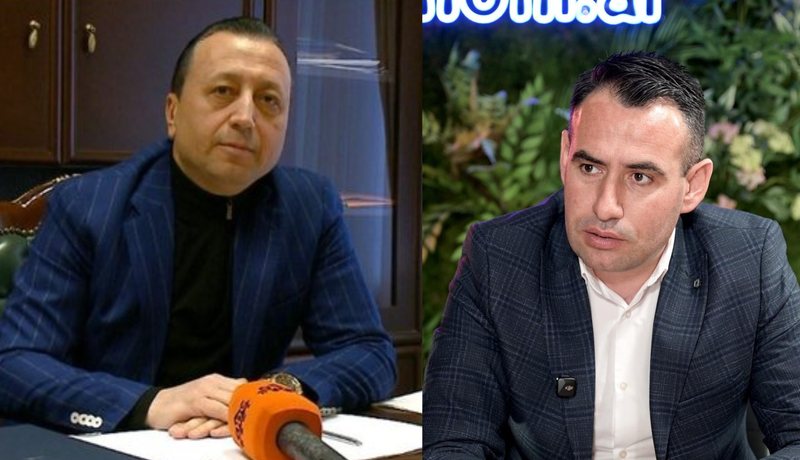
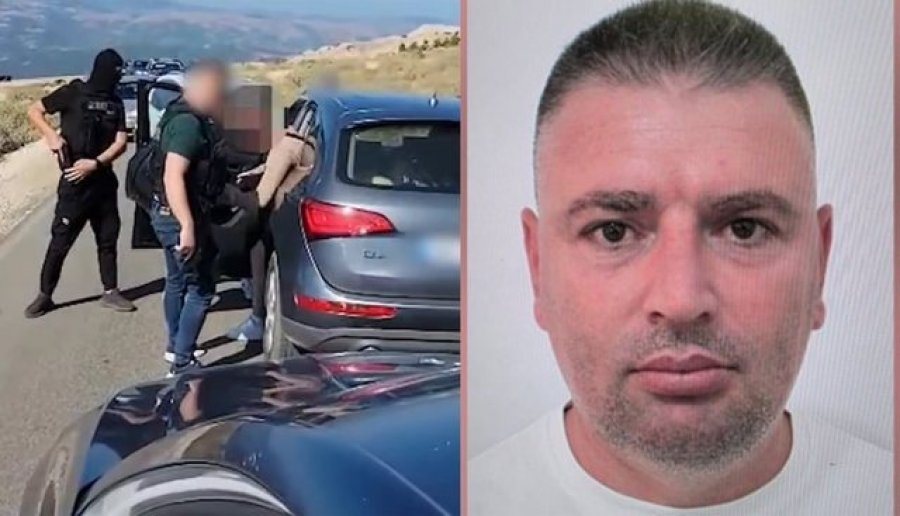
The court remanded Dorian Beu in prison this Tuesday, a person wanted two years ago for drug trafficking and who was arrested in an operation on Mount Tomorr, where he had gone for a pilgrimage.
At first glance, the operation appears to be a routine arrest after the 46-year-old had eluded police searches for two years, but data shows that Dorian Bey's handcuffing is a development that shines a red light on how organized crime has managed to penetrate the structures of the legal economy in Albania.
Bey, 46, was captured after many months on the run, while he was under a "prison arrest" security measure issued by the Special Court. From the footage distributed by the police, Dorian Bey appears to be surrounded by police in a car traveling towards Mount Tomorri.
He was on the list of 21 people investigated by SPAK and the Bergamo Prosecutor's Office for international drug trafficking. The joint file between Albanian and Italian authorities that was made public two years ago documented the transport of 120 kilograms of cocaine, 15 kilograms of heroin, 129 kilograms of marijuana and 92 kilograms of hashish, seized in several operations in Milan, Turin, Bergamo and Brescia.
The investigations describe Dorian Beu as an active link in the trafficking, who in Italy collaborated with Syrja Tola, carrying out several “heroin sales” and taking a direct role in supplying the network. His name is linked to other members of the group, his close associates such as Gernard and Emirjan Beu, who continued to be investigated as organizers of the trafficking. The arrest in Tomorr brings this file back into the spotlight, raising questions not only about the drug network, but also about its connections with sectors where the state claims to have complete control.
From fishing to drug gate
Dorian Bey's activity is not limited to drug trafficking, as he is listed as a 10% shareholder in the Durrës Fishing Port Management Organization - OMPD Shpk, created in June 2020, where another fishing businessman, Gjergj Luca, known as a friend of Prime Minister Edi Rama and his brother, Olsi, is also a partner. This organization, which includes Durrës fishermen, took over the administration of the new fishing port, built in 2015 with 12 million euros from the Islamic Bank, a public investment announced as a success for the sector.
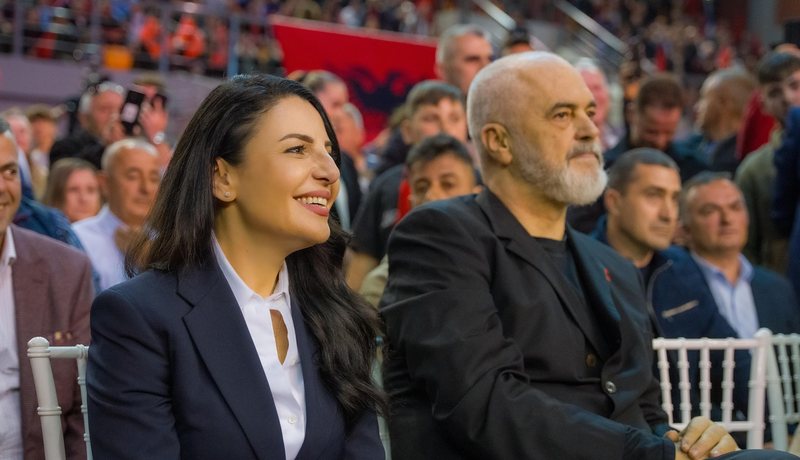
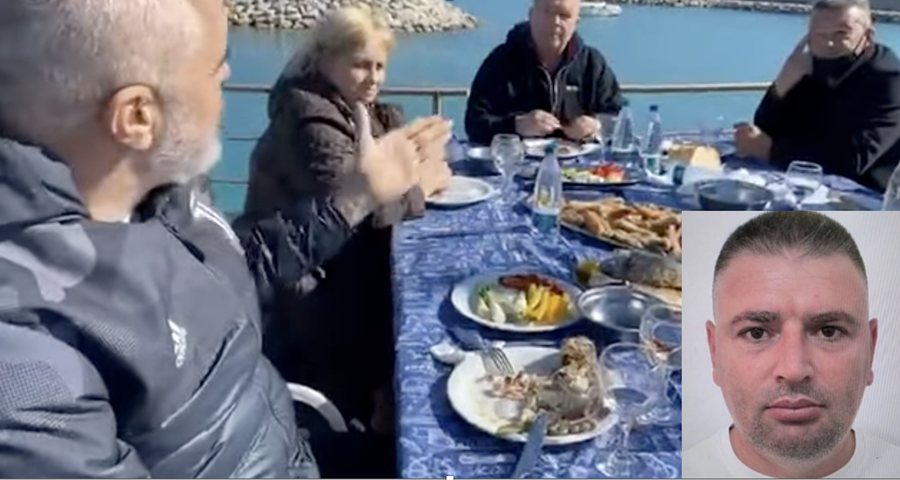
In March 2021, on the eve of the electoral campaign, Edi Rama sat down to a lunch with fishermen where Gjergj Luca was also present, to whom Rama addressed several times in confidence.
In the footage of the case, Rama is heard referring to Gjergj Luca about the objectives of the fishing sector.
"When Luca told me that we should do 1, 2, 3... then with Elidon, then with others that exports would increase and go here... I didn't believe him at first. From 20 or so million to 100 or so million. Now how much will Luce go?" Rama asks the businessman.
A few months later, after winning the elections and being elected MP in Durrës, Edi Rama secured a third term as prime minister and in September of that year, the Minister of Agriculture, Bledi Çuçi, officially handed over the fishing port to the "Fisheries Management Organization".
According to the announcement of the Ministry of Agriculture, Çuçi publicly declared: "A long-standing dream of the fishermen of Durrës today became a reality. The new Fishing Port was transferred to the Fisheries Management Organization. From today on, it is the fishermen themselves who will manage this new investment."
The fishermen's transfer of the fishing port was an early demand of theirs. But in theory, a port financed with public money cannot be transferred from the state to a private association without first going through a long process of verification, with control over the list of shareholders, over their financial resources and over the purity of their image. It happened that among the fishermen there were also drug traffickers and no one can say today to what extent their influence was in this movement.
The way the decision was made shows that it was a political act, under the effect of the enthusiasm of the election victory, that passed an entire port into the hands of an association whose partners were people connected to international drug trafficking, such as Dorian Beu. It is understood that among the Fisheries Management Organization, Durrës there were also honest fishermen and workers, but the passage of an asset like the fishing port through such a thick process raises doubts that this is not a mistake, but a tacit agreement between the government and the actors of the criminal world who have a strong influence in the city of Durrës.
Questions that arise about fishing port management
If a drug trafficker like Dorian Beu, documented in files with hundreds of kilograms of narcotics transported to Italy, owned shares in the organization that manages the largest fishing port in Albania, then did this organization serve as a cover for trafficking?
Are there any other shareholders of its that have drug trafficking records?
How is it possible that the Albanian state handed over a strategic port with its own hands to people who were on the police radar?
One explanation could be that the state was unable to conduct a basic check on those who hand over public assets. But a second variant is that drug traffickers were intentionally left to control part of the fishing port, in exchange for help in getting votes for the party. And this would be just another story in a long coexistence between the SP government and crime in Durrës.
Editorial