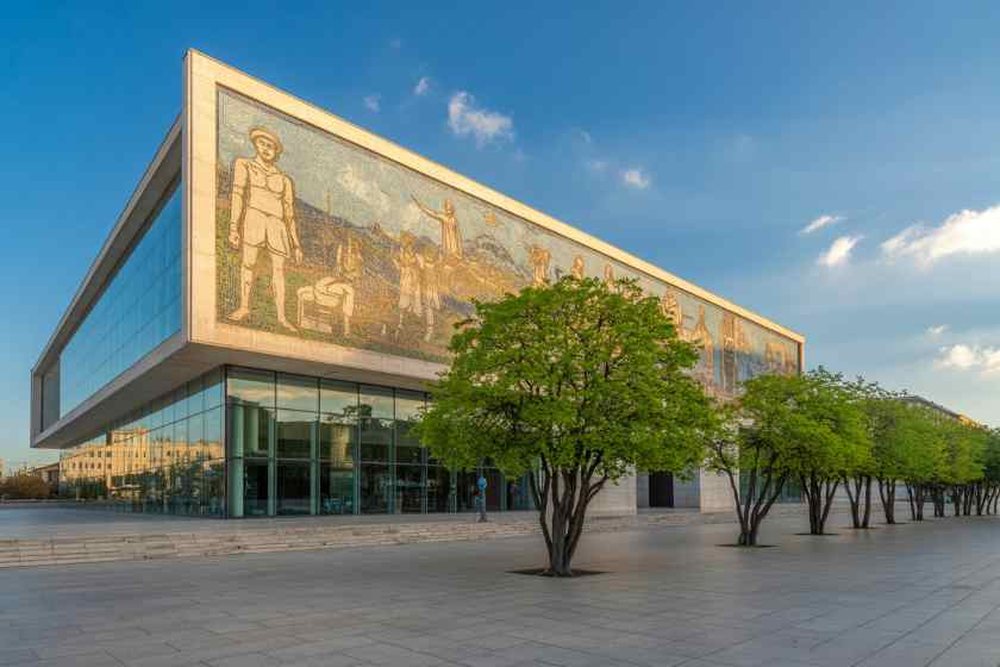
The Onufri Iconographic Museum in the historic city of Berat has recorded an extraordinary influx of visitors in the first three quarters of 2025.
By mid-September, the institution counted 61,668 visitors, recording over 10,000 admissions in the first half of September alone, a statistic that reflects the museum’s evolution into an essential center for the study and appreciation of Albania’s artistic and religious heritage, focused on the work of Onufri, the preeminent 16th-century master of Albanian icon painting.
A window on the iconographic tradition of Albania.
Located in the main neighborhood of Berat, a city architecturally inscribed on the UNESCO World Heritage register, the Onufri Museum embodies the historical and cultural ethos of the region.
Within its carefully curated galleries are contained Onufri's major achievements - the crucifixion, the panels of the Theotokos, and a collection of associated church panels - along with a wider collection of Albanian icons from the 16th and 17th centuries.
The museum articulates a cohesive narrative of Albanian Orthodox iconography, examines the interweaving of Byzantine and local devotional practices, and judges Byzantine artistic techniques.
The Onufri Museum is located within the territory of the Berat Castle complex, a UNESCO World Heritage Site that offers sweeping views of the surrounding city.
Visitors are invited to wander among the perfectly preserved Byzantine buildings, while examining a remarkable ensemble of paintings, frescoes and liturgical objects. Becoming one of the busiest museums in the country, the Onufri Institute remains vital to the preservation and dissemination of the region's historical identity.
The growth of tourism in Berat
Known as the "City of One Window on One", Berat continues to be one of Albania's main tourist magnets. Its intact Ottoman buildings, venerable churches and stunning panoramas have consolidated the city's status as a top destination for foreign visitors.
The Onufri Museum constitutes the focal point of this expansion, its annual attendance having increased steadily over previous seasons.
"The influx from France has caught us by surprise, positioning them in a very promising place, right after the Polish arrivals. Such trends show the Institute's growing global resonance, as more and more travelers include Albania's cultural treasures in their itineraries," says Miklor Pasku, Director of the National Museum Center in Berat.
Visitor Experience at the Onufri Museum
The Onufri Museum serves not only as a repository of artifacts, but also as a conduit into Albania’s enduring cultural memory. Walking through the Halls, visitors encounter masterful church paintings, carefully preserved liturgical objects, and evocative exhibits that chronicle the history of Orthodox Christianity in the region.
Outside the brick walls, a shaded courtyard and adjacent fragrant herb gardens extend the journey, offering quiet spots for meditation. The courtyard’s gentle fountain recalls medieval monastic soundscapes, inviting ongoing reflection on the heritage contained within the building.
However, the museum's charm extends beyond the permanent gallery. A dynamic schedule features rotating exhibitions, evening lectures, and documentary screenings, inviting audiences of diverse backgrounds and age groups to encounter further nuances of Albanian artistic and historical endeavors.
Beyond the museum walls, Berat itself further complements the artistic pilgrimage, with the monumental Berat Castle, the Ottoman-era Mangalem Neighborhood, and the Ethnological Museum coming together in a coherent cartography of Albanian history and cultural production, thus surrounding the Onufri Museum with a rich environment of parallel disciplinary and thematic interest.
A broad appeal for generations
The Onufri Museum remains a key point for every segment of the travel market, welcoming local Albanian families, European travelers, and far-flung adventurers alike. Increasingly, Berat’s extraordinary blend of cultural-documentary status, historical layers, and pastoral capture transforms nascent curiosity into repeat visits.
In the medium term, the Onufri Museum is expected to maintain, if not increase, the number of visitors. The goals for an expanded agenda include a series of cultural programs and rotating exhibitions that deepen the visitor experience.
At the same time, Berat's continued growth as a focal point of pilgrimage, leisure and study means that the museum will remain a key institution, preserving the city's historical identity, while offering a comprehensive perspective on Albania's multifaceted cultural and religious narrative.
Editorial