The Ministry of Infrastructure and Energy has issued for public consultation the draft National Strategy for the Development of the Mining Sector 2026-2040, a long-term document that aims to change the current model of the extractive industry in Albania.
The strategy aims to shift the sector from the export of raw materials towards a model with more added value, higher environmental standards and integration into European supply chains.
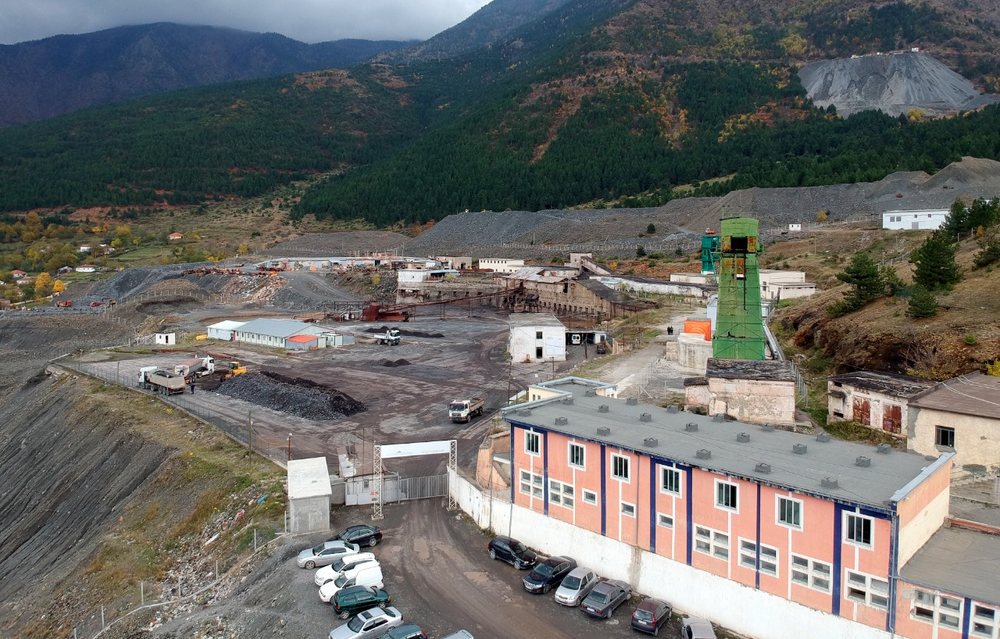
The document acknowledges that the mining sector carries a heavy environmental legacy, created over decades without contemporary technical and environmental standards.
The government highlights that a number of mining areas now out of activity pose a serious risk to the environment and public health, due to the disposal of mining waste, decommissioned dams, tailings, and the drainage of acidic waters contaminated with heavy metals.
According to the strategy, the most problematic areas include Bulqiza, Rubik, Kukës, Korça, Rehova, Pogradec, Hasi, Erseka, Munella, Mamëzi, Mëzezi, Memaliaj and Kurbnesh, where accumulated pollution continues to threaten the soil, groundwater and local communities.
Referring to a World Bank study, the document acknowledges that the cost of fully rehabilitating and recovering these areas exceeds 100 million euros.
The government emphasizes that this high bill is also related to the fact that the closure of ineffective mines has not been carried out according to European practices. For this reason, the rehabilitation of mining areas is declared a national strategic priority for the period 2026-2040 and a key part of the Green Agenda for the Western Balkans, as well as the National Strategy for Climate Change and Sustainable Growth 2023-2030.
The strategy defines five main policies and a package of priority measures that affect exploration and discovery, modernization of processing, safety and environment, human capital and transparency of mining data. One of the main measures is the drafting and implementation of the National Geological Research Plan, with the aim of identifying new sources and re-evaluating existing reserves according to international standards.
The document envisages the increase of mineral processing in the country and the development of industries related to the recycling and reuse of mining waste, in accordance with the principles of the circular economy and the European Critical Raw Materials Act.
A particular focus of the strategy is the improvement of technical safety standards at work, environmental certification of processing plants, and the rehabilitation of polluted areas.
The document acknowledges that implementation of the 2006 EC Directive 21 on the management of waste from extractive industries has remained partial.
According to official estimates, many processing plants and historic mining dumps continue to operate with inadequate safety systems, without regular monitoring, early warning systems, and certified emergency plans for flooding or structural collapse. This situation poses a continuing risk to the environment and communities near industrial areas.
The strategy also emphasizes investments in human capital, through the adaptation of educational programs to market needs, the creation of modern research infrastructure, and the strengthening of the capacities of public institutions for monitoring and controlling the mining sector.
However, the document highlights a significant financial gap between implementation needs and currently available resources.
To cover the costs, the strategy foresees a combination of public funds, private investments, support from international partners and European Union financial instruments, recognizing that without this support, the ambitious objectives for the transformation of the mining sector will be difficult to achieve.
Editorial