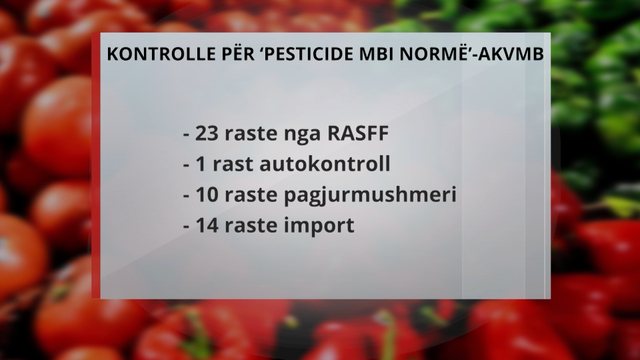
Over 23 shipments of pesticides above the norm have been identified at European borders with Albanian products during the first 9 months of this year alone, most with the same products; peppers, tomatoes or fruit.
This recurring phenomenon is not being stopped even by warnings, fines, or criminal prosecutions.
The National Veterinary and Plant Protection Authority tells Report TV that this year alone, 109 alerts have been received from the Ministry of Agriculture or the National Agency for Agriculture for pesticides above the permitted level.
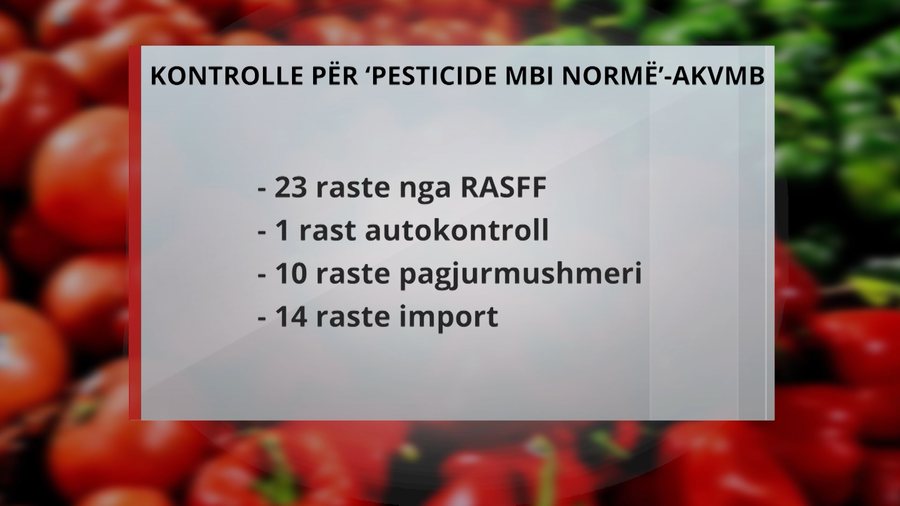
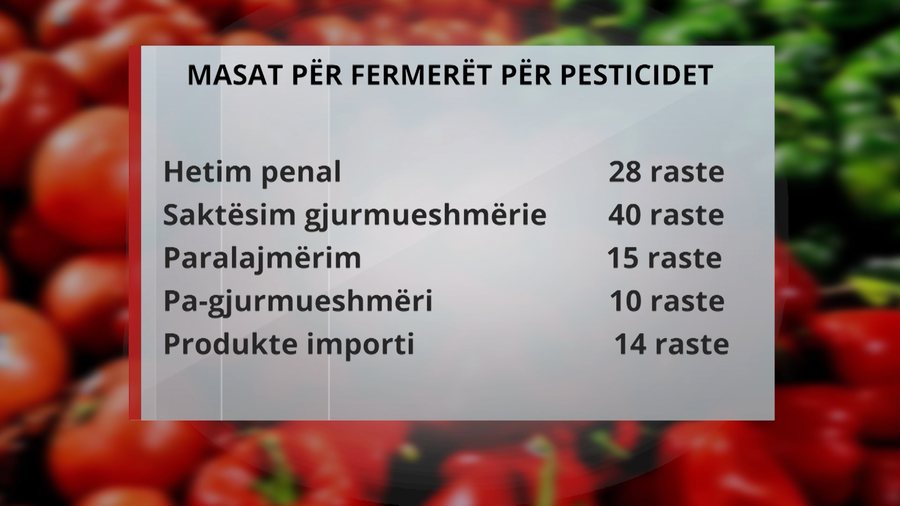
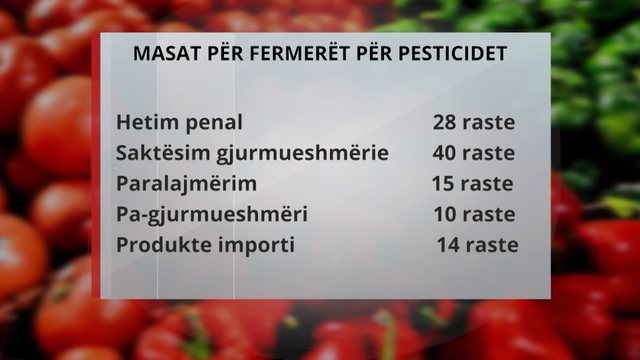
Following the inspections, 28 cases or nearly 26% of the inspected farmers were referred for criminal investigation for excessive use of pesticides or use of unauthorized PPPs.
This figure has increased 7-fold year-on-year, as during 2024, 4 cases were referred for criminal investigation of farmers suspected of using pesticides prohibited in the Republic of Albania.
But how do unlicensed pesticides end up in the hands of farmers?
Report TV addressed an official request to the National Food Authority regarding the monitoring of the agricultural pharmacy market, from which it is learned that from January 2024 to the end of September 2025, a total of 1261 inspections were carried out and a total of 25 fines were imposed for the trade of pesticides.
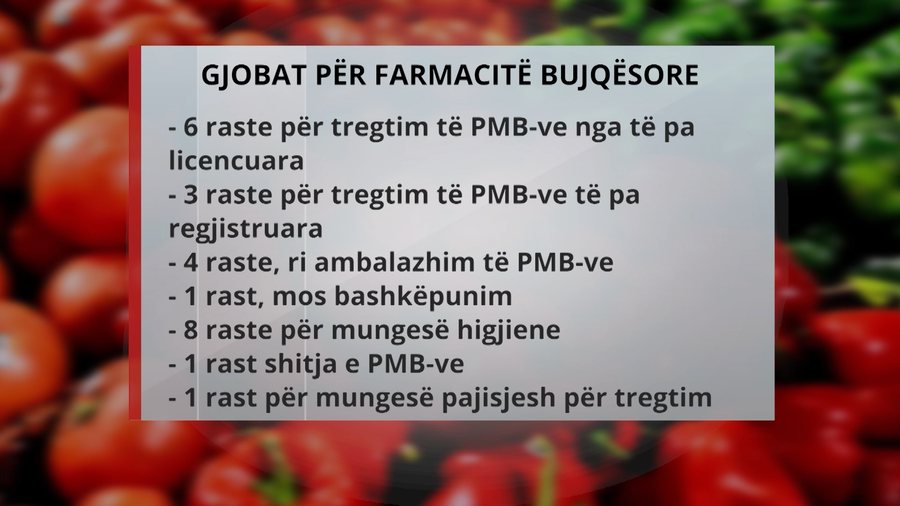
This concerns 6 agricultural pharmacies that were selling pesticides even though they themselves were not licensed (5 retail / 1 wholesale). 3 cases of trading in pesticides not registered in Albania have also been identified.
While in 16 cases it was found that agricultural pharmacies were selling expired products but with 'repackaging', they did not respect the hygienic and sanitary conditions of trading as well as other violations, including the lack of cooperation.
For all these violations, the National Food Authority has only imposed a 'fine' as a punitive measure.
Beyond smuggling, why are even permitted pesticides harming farmers?
The National Food Authority itself 'disclaims' responsibility for what happens to farmers on their 'farms', as it emphasizes that "Farm controls are carried out by the AKVMB."
Meanwhile, the Veterinary Authority, in response, says that from January to August of this year, 24 farmers were identified and warned after their products resulted in pesticide residues above the norm.
The main problem being encountered in Albanian agriculture is harvesting the product before the permitted period for pesticide use has passed.
Respecting the 'withdrawal period', or the time for the harmful effects of pesticides to end after they have been added to the product, is one of the main controls carried out, says the AKU, as the product turns out to be impure.
"In order to monitor traceability, the respective DRAKU, through relevant letters with the subject "Request for cooperation", are addressed to the respective AKVMB with the aim of monitoring and supervising farmers for the use of pesticides and respecting the use exemption in the product," says the AKU.
Farmers are practically committing 'suicide' by harvesting the product before it has been cleaned of pesticides.
But how do products with pesticides above the norm come out of Albania?
The NFA explains that for the cases notified by the RASFF System, documentation verification was carried out, which resulted in the fact that they had the phytosanitary certificate and had tax invoices for the purchase of the product from the relevant farmers.
The exporter must notify the AKVMB about the product that is ready for export, for example, pepper to Slovenia.
The agronomist of this authority performs the final inspection; issues the phytosanitary certificate, stating whether the product is controlled and clean or not.
When asked how it is possible that Albanian products, even though they receive a phytosanitary certificate, are not 'clean' at various European customs, AKVMB answers as follows: "The issuance of the Phytosanitary Certificate is to certify that the plants, plant products or other regulated articles described herein have been inspected and/or tested according to appropriate official procedures and are considered to be free from quarantine pests specified by the importing contracting party and that they comply with the current phytosanitary requirements of the importing contracting party, including those for regulated non-quarantine pests. They are considered to be practically free from other pests."
So, the control by AKVMB agronomists is carried out only for dangerous insects, which are required by the importer, but not for the presence of pesticides.
What happens to products after they are returned from foreign countries?
In the vast majority of cases, the products are destroyed in the host country, while only 42 tons of mandarins have been returned to Albania in the last 2 years, cases from December 2024.
Once returned to the country, they are disposed of according to procedures set out in the legislation in force for environmental protection, says the AKU.
Are products that have resulted with pesticides sold in Albania?
It still remains unclear whether products that are exported and contain pesticides are also shown to Albanian consumers.
In response, the AKU states that "based on verifications of the traceability system in OBUs that have carried out exports that have resulted in problems related to pesticide residues above the norm, it results that these Food Business Operators do not trade in the domestic market, as they work only for export."
What about the NCA and criminal charges?
The National Food Authority does not provide any figures on whether or not it has filed criminal charges for cases of trading products with a high presence of pesticides, and it does not even clarify whether it has sued any of the illegal agricultural pharmacies, or those that traded smuggled products.
Editorial