cAPITAL
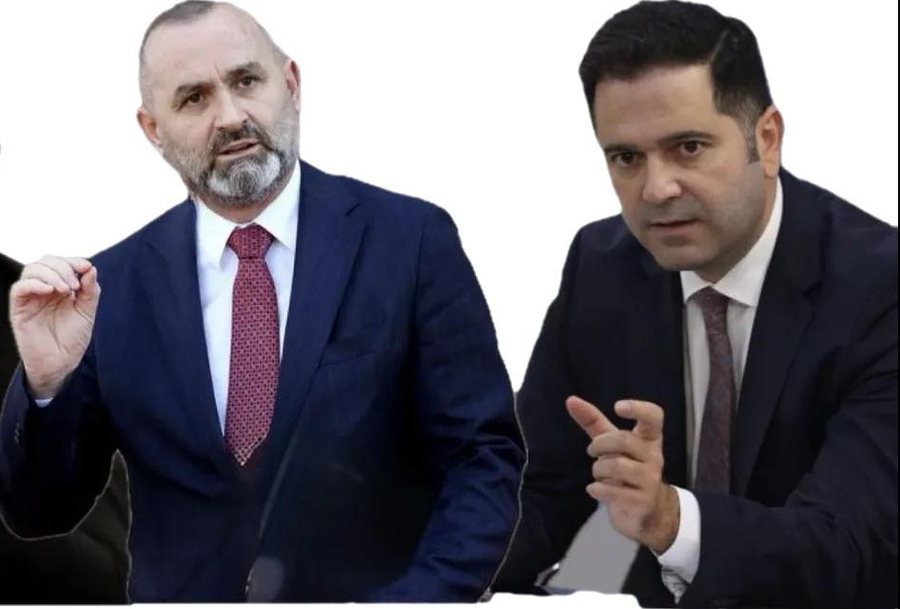
Two insidious instructions by the Minister of Finance, Petrit Malaj, and the former Minister of Justice, Ulsi Manja, signed secretly and without fanfare in July, have given Albanians a bitter taste; the equalization of state bailiff service fees with those of the private sector.
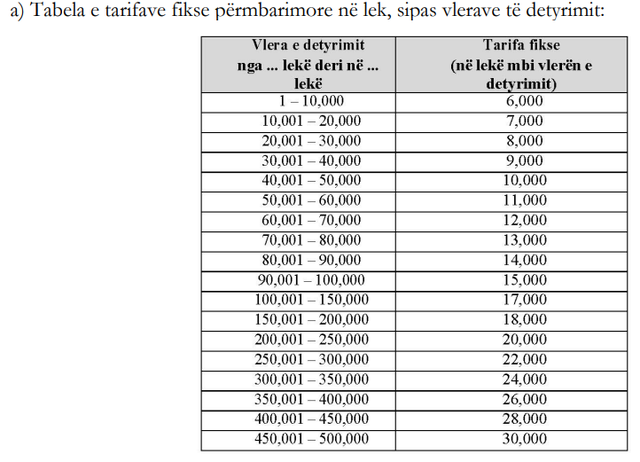
The two guidelines came to light a day ago, when they were published in the Official Gazette. The first changes the fixed fees, while the second changes the “success” fees that state bailiffs must charge creditors for their services.
At first glance, the two instructions seem like normal acts. But when you look at them better, both the lines of the instructions and their figures, they say a lot: both instructions are identical to those that the "Rama" government with ministers Gjonaj and Ahmetaj approved in 2018, for the private bailiff service.
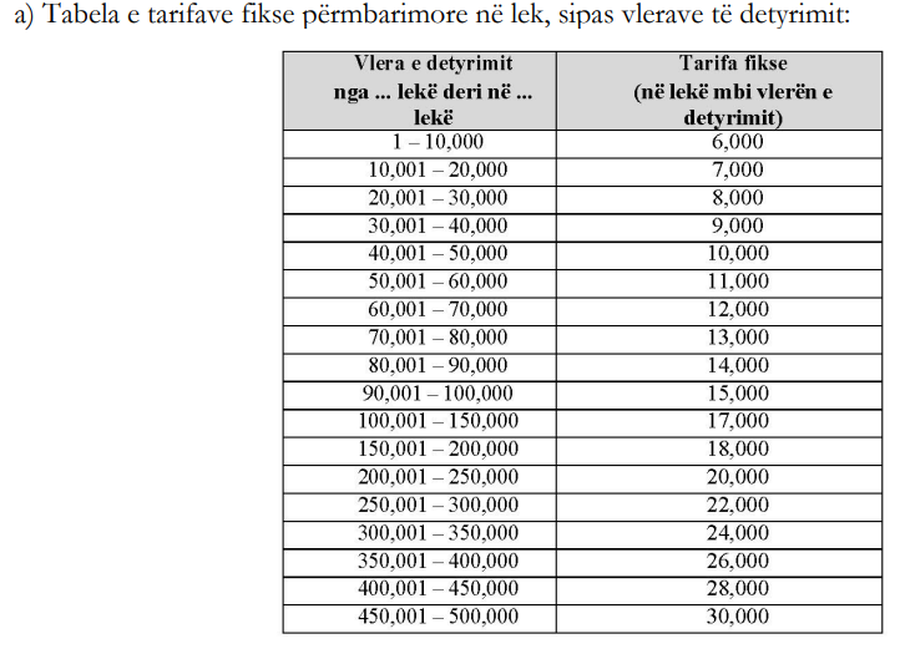
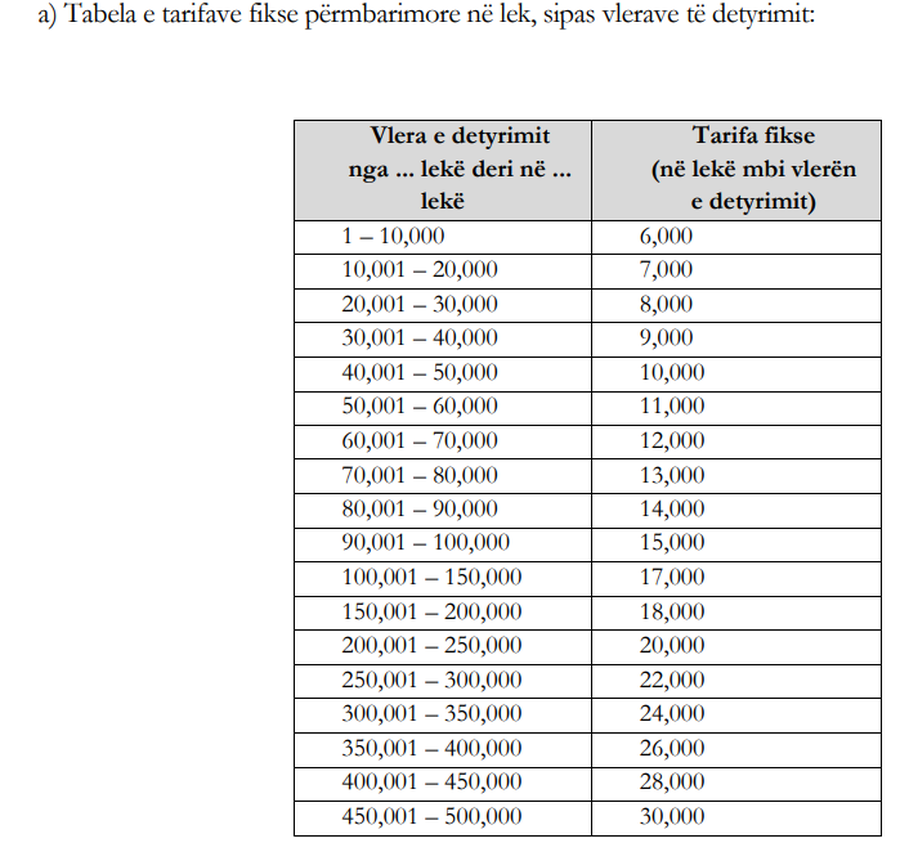
State fees Private fees
There was a huge uproar at the time and for years afterward because private bailiffs refused to lower their “fees” to almost the same level as state bailiffs. However, there was a small difference; state bailiffs had lower fees than private bailiffs.
What does this mean?
A creditor, an individual without a company, or a company with dozens of employees, even a bank, had two alternatives from 2018; one was to choose private enforcement with a fee of X or the state enforcement with a fee of Y, the latter being lower than the former.
So, creditors (the people) could choose state enforcement at a lower fee than private enforcement fees. But what happened from 2018 to July of this year, when new guidelines were issued that equated state enforcement fees with private ones?
According to Ministry of Finance sources, no budgetary inflows have come to the state budget in the last 6 years from the state bailiff service, even though state fees were lower.
So, why were state enforcement fees increased? To increase budget revenues or to help "approach" creditors to this service category? If creditors haven't approached us in 6 years with a lower fee, how will they come up with a higher fee?
A source from the General Directorate of State Enforcement states that "ministers Manja and Malaj equalized the fees for state enforcement with private enforcement, for reasons of equal competition between the two services, state and private."
When representatives of the private enforcement service were asked about this change, they refused to comment without first hearing the "state" explanation for this "equalizing" change in tariffs that will be given by "Minister Petrit Malaj, as a financier with long experience in these matters...".
What is striking is the silence of the two ministers who co-signed the instructions, former Minister Manja and Minister Malaj, regarding this summer change. No statement from their staffs, no information about why this change was made, except for the appearance in the Official Gazette of the two instructions, which if you look closely are copy-pastes of each other, just like the names of the services themselves, judicial enforcement, with the only difference: one private and the other state.
The two tariff tables that the two services will use are surprisingly so similar that the question arises: How did the specialists from the Ministry of Finance and those from the Ministry of Justice arrive at such precisely equal indexation conclusions?
From the entry into force of the instruction on state bailiff service fees, the same as those for private bailiffs, companies, banks, and individuals will no longer have any interest in knocking on a state bailiff's office to execute a court decision.
Why would they go to such an office, when the price (rate) they would pay is the same, with the only difference being that the state office stays open until 4:00 PM and on Fridays until 2:00 PM, while a private office does not have set hours due to private interest.
It's like equating the prices of the Public University with those of private ones or the state-run Mother Teresa Hospital, for example, with those of American 2, nearby. Where would people and patients go if the price of the operation was the same, without any difference? Of course, not to Rama's hospital, which amazed Evis, whom Rama brought from the West to amaze the world with Albanian healthcare.
Enforcement fees are an indicator of the ridiculous philosophy that incentivizes the market economy in Albania, which gives "breath" to private initiative or service: The service provided by a state employee has the same fee as the service provided by a private individual who subsidizes his salary. And this is nothing other than financial extortion in the state policies of the government "Capture Europe 2030".
Editorial