cAPITAL
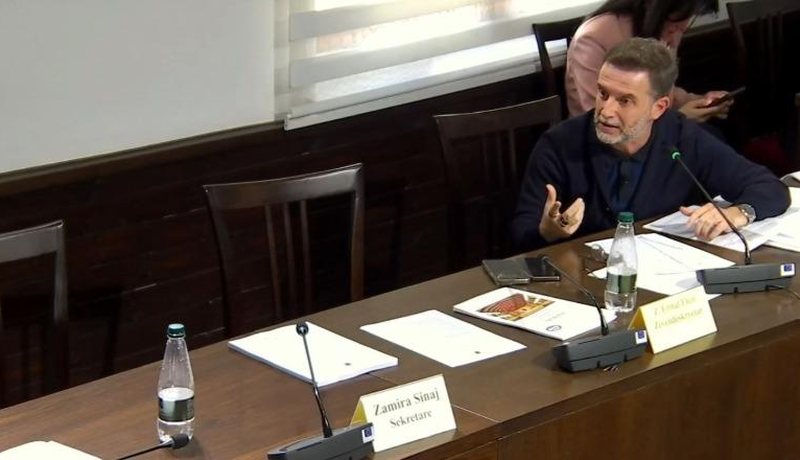
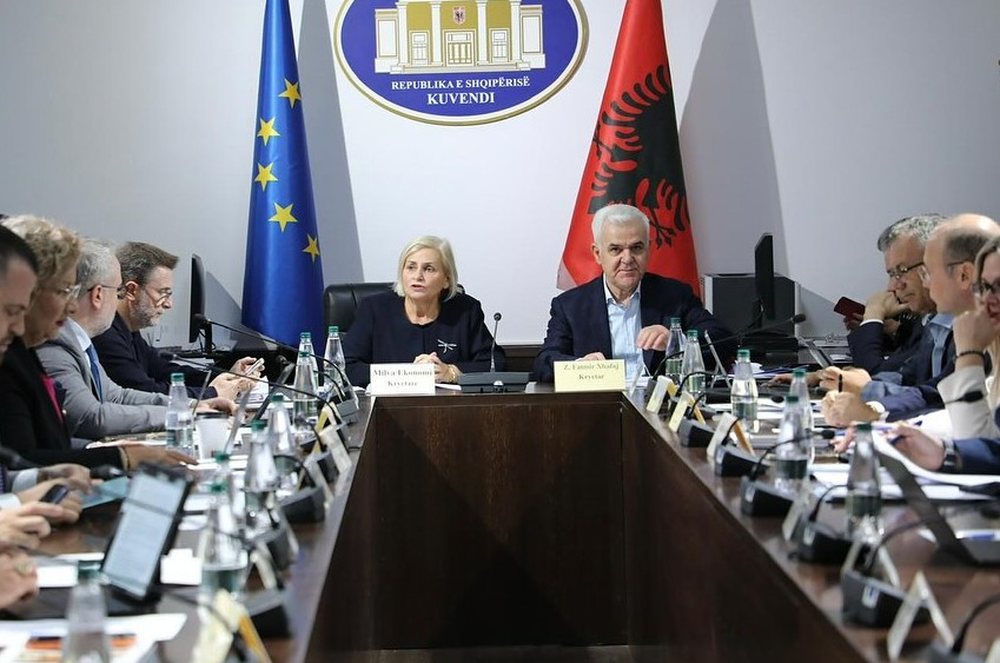
The Parliamentary Committee on Economy and Finance summoned the Financial Supervisory Authority (AMF) for its annual report and something immediately caught our attention. The discussion took the form of a conversation about the third party, where the insurance market was discussed, in the absence of third parties. The fact is that the insurance market had no representative in the room, while the room itself showed a tendency and willingness to talk precisely about insurance and its market.
The AFSA is a monitor of the insurance industry and, as its regulatory legislation clearly states, is not their representative. The lack of a voice from the market inadvertently led the debate to become one-sided, taking the form of political rhetoric laced with inaccuracies and untruths.
Rhetorical questions directed at the AFSA, as if it were the representative and not the market regulator, also raise questions about the level of knowledge of the organic laws themselves. All of this causes harm to those who should be the main beneficiaries of the parliamentary debate: the citizens.
Parliamentary debate, among other things, also has the function of informing and educating citizens. These functions, when operating under conditions of attacks on the market, are significantly compromised.
Financial insecurity as a system
The insurance market in Albania has been at a low level for over 15 years: Albanians only insure 10 thousand lek per capita, ranking last, not only in Europe, but also among similar economies in the region.
The Albanian insurance market, despite the attacks, in many cases undeserved, offers all the products that international markets offer, even with a high guarantee and security, since all agreements have reinsurers rated by Standard and Poors with an “A”, two or three. This makes the level of insurance security the highest possible. The market offers and the offer is of the highest quality and security.
Politics should ask itself: Why is this market not changing? Why is there no change when, contrary to what was intentionally implied by the discussions, there are no official complaints about non-payment of damages?
Market penetration is 10% in non-life insurance and only 4% in life. This means that very few Albanians have any of their assets protected. Or, read differently, this means that in the eyes of politics, the financial insecurity of Albanians in the face of risks has been legitimized, normalized and, in silence, almost legalized.
This means that Albanians are the most vulnerable in Europe in the face of financial risks. One surprise and for them failure follows, not recovery. Instead of orienting Albanians towards protection, what does politics do? It attacks the protectors, the insurers.
While our country is ranked among the most vulnerable in Europe to earthquakes, fires and floods. On every continental red map of financial risks it is in the TOP 5, and yet legislators did not ask any questions, strategies or proposals on this alarming reality, but instead threw incorrect theses at the parliamentary tables.
Albanians, instead of being fed an unfounded distrust of insurers, so that they can become financially educated and pay for their own security like other Europeans, are being given more doubts from the parliamentary tables. It seems that instead of pushing Albanians towards financial security, politics seeks to keep them in insecurity by attacking insurers.
Some unspoken arguments
In these parliamentary discussions, Albanians should have been told that Albanian insurance companies are licensed entities, subject to continuous control and reporting, with guaranteed capital and international partners, the biggest names in the world of reinsurance such as Munich Re, Hannover Re, Allianz, Swiss Re.
This unspoken fact means that their insurance portfolios are 100% covered by reinsurance, meaning that every risk is financially guaranteed.
In these parliamentary discussions, Albanians should have been told that Albanian insurance companies in the first 8 months of 2025 alone have paid 57 million euros in damages, which have 50 thousand Albanian names as first-person witnesses. 50 thousand beneficiaries who have not been left alone in the face of disasters. They, based on insurance contracts, have been paid damages: property, health, motor vehicle, life.
Unfortunately, instead of a discussion about protecting citizens, we heard a play on words, comparisons, allusions and denigration of operators who try to offer serious insurance products in the Albanian market. However, this approach has a cost and the cost of distrust weighs on the citizens themselves, directly on the entrepreneurs.
GoFund for recovery as a lesson for politics itself
While lawmakers are not taking care to build an infrastructure that promotes financial education, which increases confidence in insurance as a wise investment in any venture, a well-known holiday home was accidentally burned down in Leskovik and the only way to get it back up and running was to open a GoFundMe.
This is a pure lesson with strong notes of irony given to politics, that politics that, instead of increasing citizen awareness of the importance of insurance, instead of strengthening citizens' trust in the insurance market, makes jokes and insinuates about an insurance market that does not pay.
No official remembered to talk about insurance that could have saved this enterprise, like dozens and hundreds of other families and enterprises, from loss. None of them is taking and will not take the responsibility to say that today the Albanian insurance market has 100% potential to stand by its responsibilities, has the potential to stand by 100% of the insurance contracts it signs.
No one is saying too much that Albanians, in order not to remain at the mercy of charitable initiatives or unaccounted state aid, risking the collapse of calculated projects, will have to provide more.
The duty of institutions is to guarantee citizens that insurance is 100% legal and financial protection and that today, with the legislation in force, the insurance market is 100% supervised, regulated and safe.
They must be reminded tirelessly that every insurance contract is supervised by the AFSA and, if a company does not pay, the court decides, just like in any country governed by the rule of law. Companies cannot escape their responsibilities.
If the supervisory laws are not strong, they are there to strengthen them. They are there to strengthen the courts as well. To strengthen the legal protection of citizens. In any case, to strengthen their trust in security.
Because Albania does not need to invent: it is enough to do as the civilized world does, according to the principle: "Provide everything you can, the more, the better." So that citizens can quickly recover after any accidental fall from disasters.
Incentive and protective strategies for citizens
Instead of parliamentary committees repeating the same analyses every year, a national strategy for the financial protection of citizens is needed. In accordance with parliamentary regulations and democratic legislation, this strategy should include insurers themselves as partner actors, not as targets of attack.
This strategy must lay out the appropriate and sharp answers on how we can make the Albanian farmer's enterprise safer from the risk of bad weather, which nullifies production and leaves him without finance, takes him out of the market, bankrupts him. It also leaves the market without the products of the local farmer, and without the local farmer.
What do we do with livestock when their farm and livestock burn down? When they can't get the raw materials to the dairy? They bankrupt themselves and undermine the production chain, resulting in increased prices for domestic products, which are crushed in competition with imported livestock products.
How can we strengthen the financial security of Albanian citizens when electricity burns down their homes or electrical appliances?
How to clarify and regulate the system of assuming financial responsibility towards the citizen when a doctor, pharmacist, or dentist makes a mistake and causes damage with financial consequences.
How do we regulate, with an enforceable law, and not just on paper, the public liability of restaurants, hotels, accommodation structures, bars and eateries, if a customer, tourist or employee, is poisoned or harmed in their premises?
Liability for uninsured damages remains orphaned because the parliamentary tables did not want to frame the parliamentary discussion in this way.
How can we ensure that the Albanian citizen, who pays for state health insurance, receives countless benefits and quality services from private health insurance?
Politics should raise the question of why this insurance is taxed at 10% when there should be special incentives: whether it likes it or not, it has been removed from the state insurance scheme, and this also applies to other products, for home insurance, cattle insurance in villages or the entire agriculture sector?
If this is the case, to give him maximum protection, why not let the citizen choose his own best and highest level of protection? For each of these questions, the Albanian insurance industry, with its vast experience and the best market expertise, has the answers.
A responsible policy for the financial security of its citizens invites insurers and questions them. It asks them, it does not attack and denigrate them. It invites and listens to them as partners, it does not incite distrust among citizens through unfounded insinuations.
The fact is that the daily life of an Albanian is the most financially insecure in Europe. The Albanian insurance market guarantees full coverage. Where does it fall short, then, if not in politics, legislation and a financial education system that requires the full commitment of legislators? This approach would also make the market itself healthy.
Because, ultimately, the lack of these laws, which answer the questions above, is the main reason why foreign insurance investors hesitate to enter the Albanian market directly.
Editorial