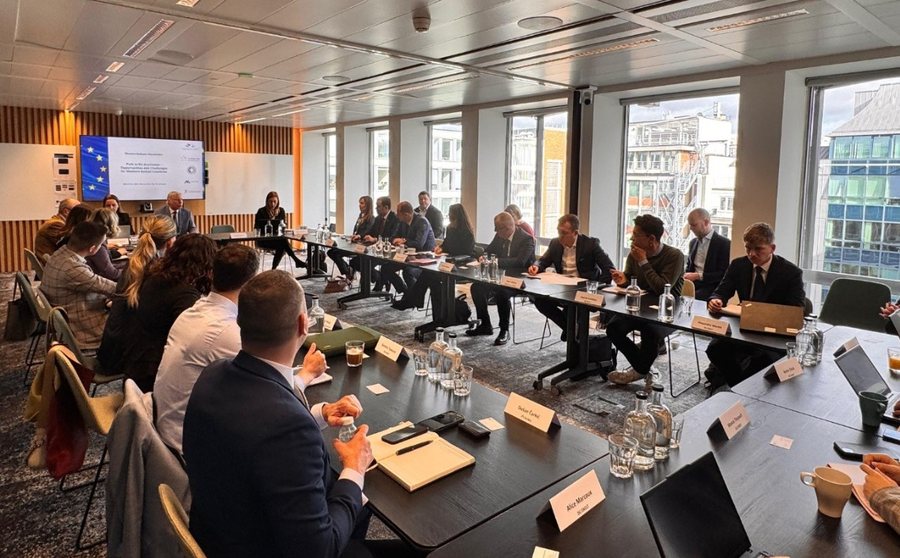
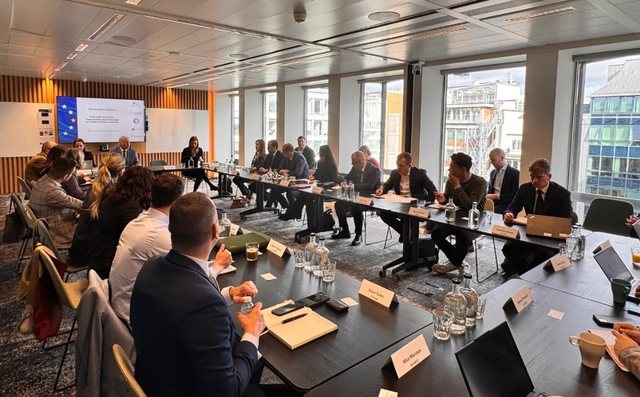
The American Chambers of Commerce of the Western Balkans met in Brussels with senior officials from the European Commission and CEFTA to discuss reforms, economic integration, and approximation with the EU acquis.
AmCham Albania was represented by Executive Director Neritan Mullaj, who emphasized the importance of clearly defining priorities by the Western Balkan countries in order to accelerate their integration into the European Union, as well as the design and implementation of sustainable policies that support this process.
Meanwhile, Marin Gjonaj from Gjonaj Group Holdings raised the problem of carbon tax on energy sold by Western Balkan countries.
"Managing the CBAM tax rules for renewable energy in the field of sales from the Western Balkans to European Union countries is a critical issue. The approximation of trade and industry agreements with the EU are very important for business in the Western Balkans. Also, the Western Balkans CBAM coefficients and the application of EU-certified verifiers is a necessity, not only for entrepreneurship but also for the national economies of the region itself," said Gjonaj.
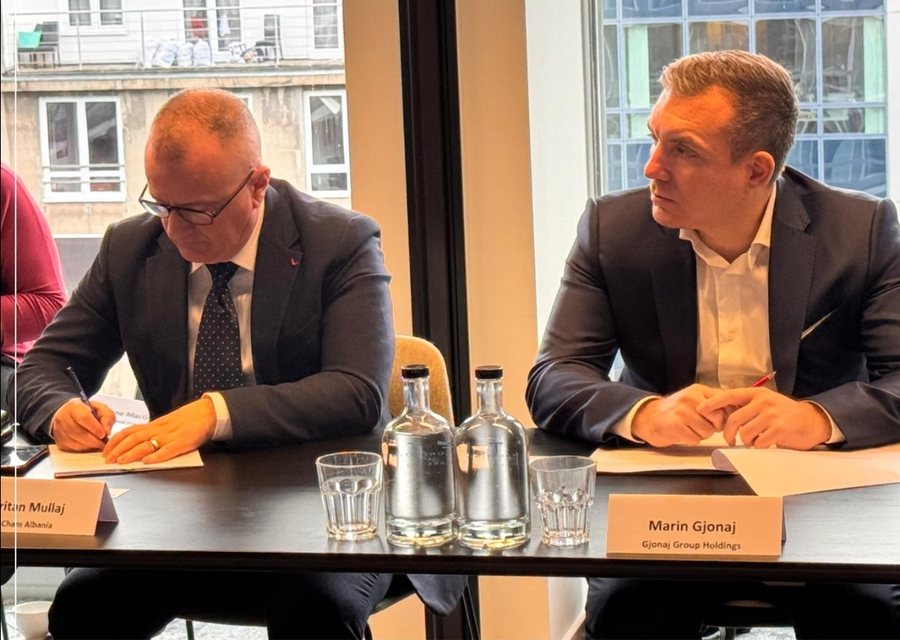
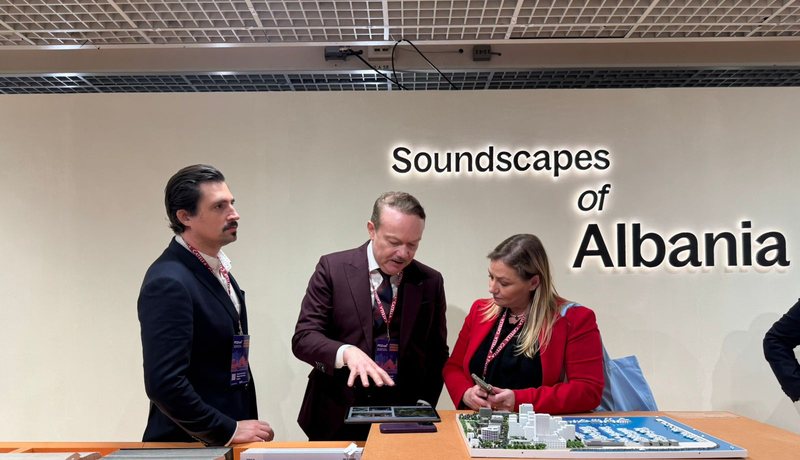
Marin Gjonaj and Neritan Mullaj
The carbon tax has become a serious problem for producers of electricity from renewable sources. From January 1 of this year, every product imported into the European Union that is produced by emitting carbon must pay a tax as a measure of compensation for pollution. This group of goods also includes electricity.
The tax, which is part of the so-called "Carbon Border Adjustment Mechanism", has a base level of around 90 euros per megawatt of energy imported into the EU borders, which is even higher than the price.
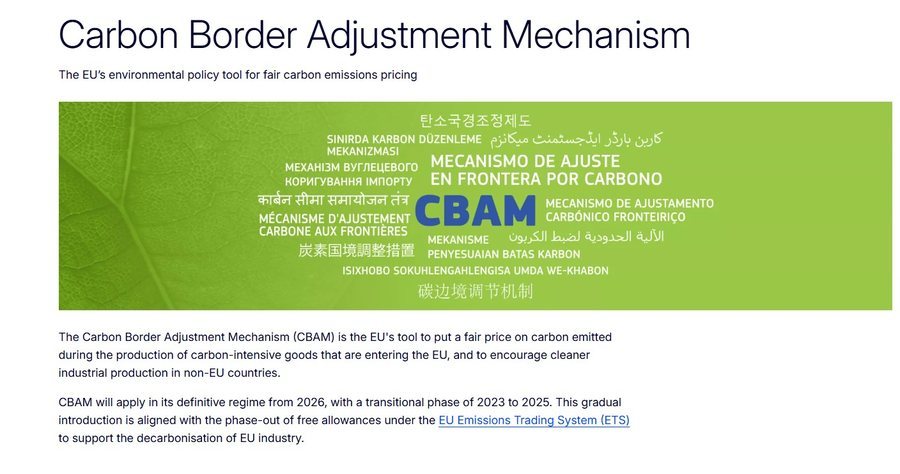
But the mechanism foresees that exporting countries can reduce the tax on their products significantly if they buy green certificates to cover carbon or if they prove that the products produced come from green sources. In the case of Albania, which produces almost all of its energy from water and the sun, the tax would have to be negligible, close to zero.
But the Albanian government, like every government in the region, did not put enough pressure on the European Union to determine the appropriate coefficients for each of the Western Balkan countries. In this case, Albania is the biggest loser, as Albanian energy would have to have an advantage over all other countries.
Editorial