Klodian Tomorri
The government blocked the revaluation of citizens' properties for almost two years on the grounds that new reference prices for Albania's districts, especially coastal areas, had to be approved.
"There was an initiative to revalue properties, at a reduced rate. The Ministry of Finance considers that before continuing with this process, we should redefine the reference prices of properties for the entire Albanian territory, except for Tirana, which has been updated," declared Finance Minister Petrit Malaj in February 2025.
But when the revaluation law was finally voted on by the Assembly and entered into force last month, the reason that held back the resale of properties for two years was quietly undone.
The government did not approve new reference prices for the coast and other areas of Albania, outside of Tirana, but left in force the old references, which had been made in 2018. Faced with these acrobatics, the Ministry of Finance found an Albanian solution.
"For properties outside Tirana, the revaluation cannot be carried out with reference prices, but only through a private appraiser," Malaj announced two weeks ago, immediately after the revaluation came into effect.
Blocking the secondary construction market for two years for the sake of approving new references and then leaving the old references in force are not random acrobatics. The suspicion is that all this is a huge mafia scheme, which has two direct consequences. First, it has feasted the construction oligarchy with hundreds of millions of euros and secondly, it has left behind a giant trail of evasion and money laundering.
Evasion and money laundering
path Reference prices serve three legal purposes.
1-They determine the property tax paid by citizens, which is 0.05 percent of the reference value of the property.
2-They determine the infrastructure impact tax paid by builders, which ranges from 4-8 percent of the reference floor.
3-They determine the profit tax paid by builders, which is calculated as sales minus costs.
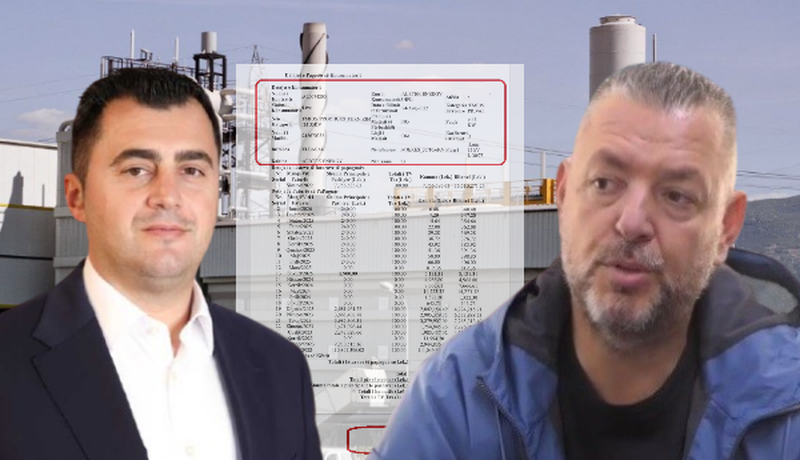
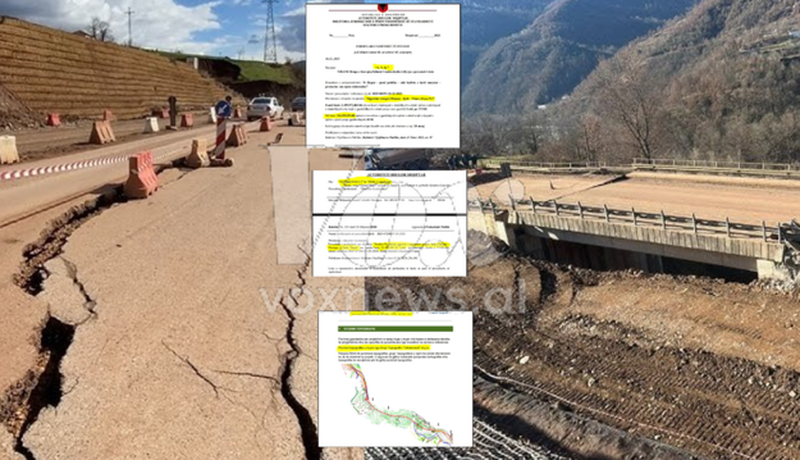
Petrit Malaj lied publicly when he blocked the revaluation law in the fall of 2024 on the grounds that new reference prices for the coast and districts outside Tirana needed to be approved. In fact, the new prices were drafted in June 2024. Kapitali is publishing the document.
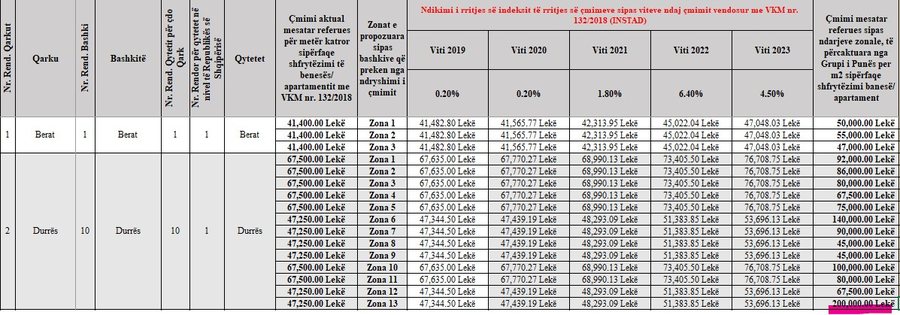
The table above shows the reference prices for Durrës, which were prepared in 2024. For the Lalzi Bay area, the reference increased from 47.2 thousand lek per square meter, which is the existing level, to 200 thousand lek or almost 2100 euros per square meter.
On the southern coast, Dhërmi, Himara, Palasa, Saranda, the increases were also three to four times, and perhaps even more. But the approval of the new references was strangely blocked.
What are the consequences of not approving the new reference prices?
Suppose a builder builds a resort on the Lalzi or South coast. The tax he pays for the impact on infrastructure is calculated at 500 euros per square meter and not 2100 euros as the new references had determined. In a large resort with hundreds of villas and apartments, the impact of the tax on infrastructure alone is millions of euros, money that should have been paid into the state treasury, but ends up in the builder's account.
Secondly, the profit tax. Due to the increase in construction costs, most sales are declared above existing references, but still much less than their real level. Suppose the same builder, whose construction cost is, say, 1 thousand euros per square meter. He declares sales contracts with a value of 1100 euros per square meter, telling the state that I am selling twice above the reference price. Meanwhile, the taxable base for profit is 100 euros per square meter, i.e. the difference between the sales price and the cost.
But if the government had approved the new reference prices, in Lalzi Bay or Dhërmi, the builder would have been obliged to declare a minimum selling price of 2100 euros per square meter. The taxable base would not be 100 euros per square meter, but 1100 euros per square meter.
So with the old reference that was left in effect, the resort builder pays 15 euros in profit tax per square meter that he sells. If it were the new reference, he would pay 165 euros in profit tax per square meter sold. This is the reason why the old references were left in effect. But it is not the only reason.
Now imagine a drug dealer or corrupt official who buys a villa on the country's elite coast. On paper, he buys it for 1,100 euros per square meter, but in reality the real purchase price is much higher. This is the mechanism of money laundering.
If the new references were in force, the official or trafficker would be forced to bank 210 thousand euros for a 100-meter apartment and not 100 thousand euros as they spend today and give the rest in cash.
Decision-making, always in one direction
The blocking of the revaluation due to references removed from the market for two full years the apartments of citizens who were waiting for the law to enter into force to sell their apartments or houses. This left on the market only the new apartments of builders which, in the first transaction, from the builder to the buyer, are not taxed on capital gains.
This move created two effects. First, it favored the sale of builders' apartments and second, it enabled prices to be kept artificially high due to the removal of citizens' properties from the market.
So two actions by the government, which only served one purpose, that of the builders. This is a sophisticated operation, which moved hundreds of millions of euros and forced those who put it into practice to also become public servants.
"We are in discussion regarding the new reference prices for areas outside Tirana, as recent tax authorities' inspections of real estate offices in Tirana and beyond have identified differences between the prices registered with the Albanian Property Tax Agency and those resulting in the systems of these offices," Petrit Malaj declared two weeks ago.
So in short, the Minister of Finance is saying that the real sale prices of coastal properties are higher than the new references that were prepared. To this end, the government left in force the old references, which are four times lower than the new ones.
So, since the reference of 2 thousand euros per square meter is lower than the real price, we are leaving the old reference of 500 euros per meter in force. These are the calculations of the government and the Minister of Finance.
Editorial