The Albanian government may ban foreign investments coming from countries outside the European Union, in a wide range of sectors of the economy, considered critical or sensitive.
Through a special decision, the Council of Ministers has approved a regulation, which practically gives the government the legal power to investigate and then ban foreign investments when they pose a risk to national security.
According to the regulation, all these investments will be reviewed by a special inter-ministerial committee, which will have representatives from several ministries and the country's intelligence agencies. This committee will also have the power to cancel private contracts, including the sale of shares of Albanian companies to foreign investors outside the EU, when they are judged to be unsuitable.
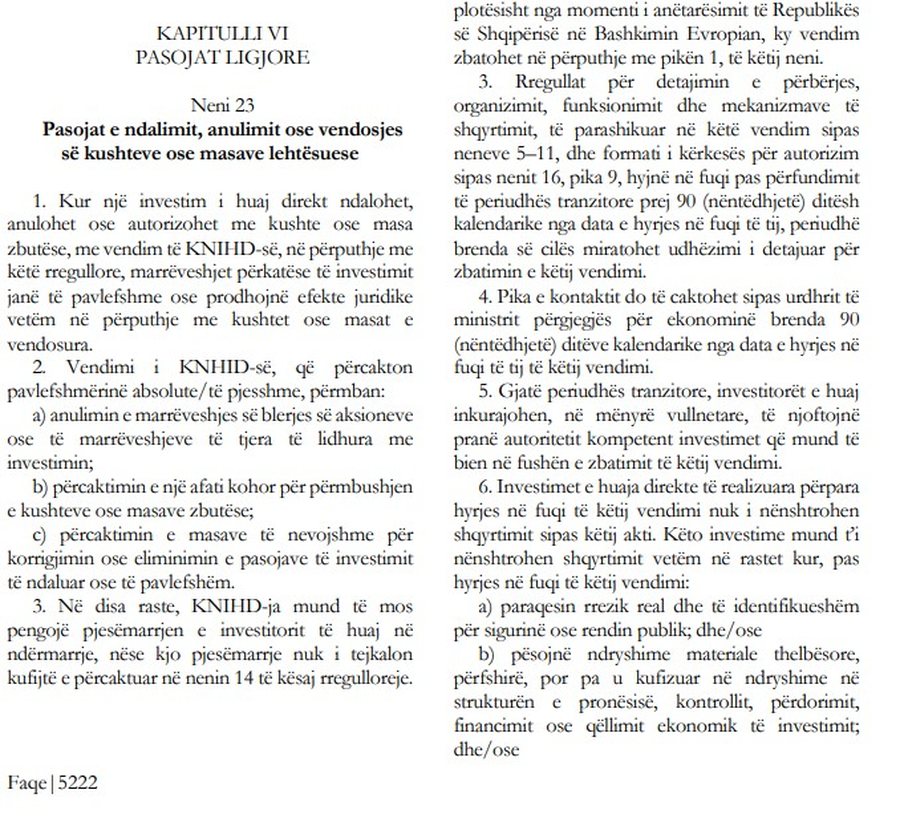
"The decision of the KNHID, determining absolute/partial invalidity, contains the cancellation of the share purchase agreement or other agreements related to the investment, the setting of a deadline for the fulfillment of conditions or mitigating measures, the setting of measures necessary to correct or eliminate the consequences of the prohibited or invalid investment," the regulation states.
But which sectors are considered sensitive? According to the regulation, critical infrastructure of energy, information technology, transportation, health, food, banking, media, defense, etc. will be part of the reviews.
Albanian companies in these sectors that want to sell shares to companies outside the EU must first request authorization from the Inter-Ministerial Committee. If they do not do so, the committee begins reviewing the investment from the office and makes a decision to prohibit or approve it.
The government says that existing investments by companies outside the EU are not affected by this regulation, but may become subject to scrutiny when they pose a real and identifiable risk to security or public order.
Editorial