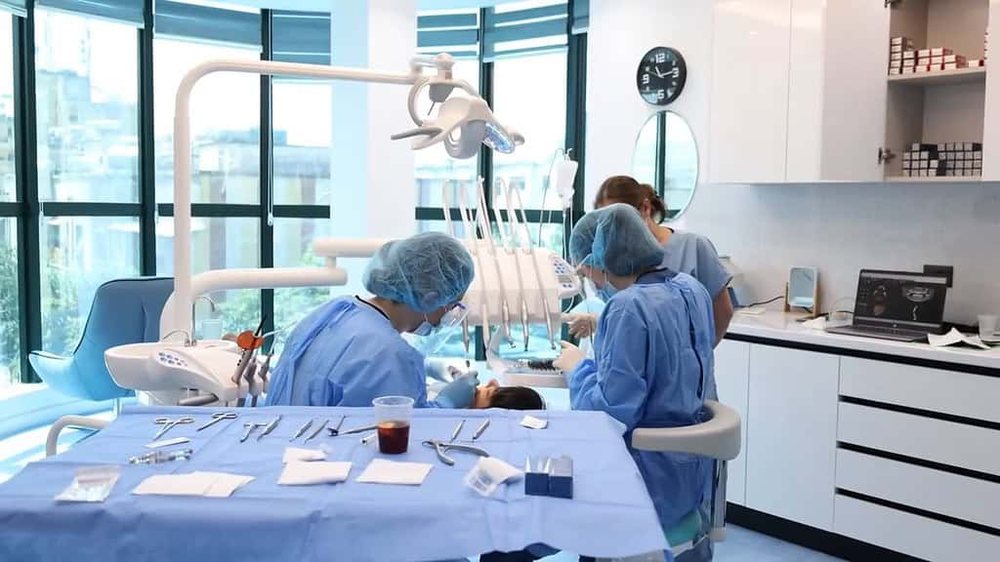
The Italian dental market is worth over 10 billion euros per year in private household spending, according to AIOP data and ISTAT-SHA surveys. This figure places dental care in second place among out-of-pocket healthcare expenditures, right after pharmaceuticals, and it alone accounts for approximately 21% of the country's total private healthcare spending.
However, a growing portion of this market is quietly migrating abroad. According to industry estimates, over 200,000 Italians traveled abroad for dental procedures in 2024.
With an average cost per patient estimated between 2,500 and 3,000 euros - the typical range for implants and prosthetics, which make up the majority of procedures - the total value of Italian dentistry spending abroad exceeds 500 million euros per year.
These sources are outside the national economic cycle and, given the already compressed margins for Italian dental practices, represent a significant loss of revenue for the sector.
The destination that captures the bulk of this flow is no longer Croatia, for years a favorite destination for Italians seeking affordable treatment.
The new epicenter is Albania, where dental tourism saw a 400% increase between 2020 and 2025, with over 80 thousand international patients in 2024 alone. The Italian market is undoubtedly the largest.
Reasons
The reasons for this change are attributed to clearly identifiable macroeconomic dynamics. Croatia's entry into the European Union and the Schengen Area has led to a gradual adaptation of the operating costs of Croatian healthcare institutions to EU standards: rent, salaries, supplies and regulatory costs.
The result has been an increase in price lists that has eroded the price difference with Italy, bringing it from 40% a decade ago to the current 20-25%. On the other hand, Albania maintains a significantly lower cost of living and facility management, with a difference of up to 70% for key implant and prosthetic services.
The numbers speak for themselves. A full dental implant with crown, which in Italy costs an average of between 2,500 and 3,500 euros, in Albania ranges from 650 to 950 euros. A complete dental arch rehabilitation with the All-on-4 technique - a procedure that costs between 8,000 and 14,000 euros in Italy - is offered for 3,200 to 4,800 euros in Albania.
According to data published by the Trio Dental Center in Tirana, a facility that treats over 3,000 international patients each year, the average savings for Italian patients are around 70% compared to national price lists and between 30 and 40% compared to Croatia.
Not just the poor
This phenomenon no longer only concerns those who are most economically vulnerable. Industry data shows a progressive decline in the average age of Italian patients traveling to Albania - from 58 years old in 2021 to 47 years old in 2025 - and an increase in the complexity of the treatments requested: 60% of requests now include full dental arch rehabilitation, with treatment plans involving multiple stays over several months.
The profile that is emerging is that of the middle-income professional or family who, faced with a quote of several thousand euros for a procedure in Italy, carries out a rational cost-benefit analysis and opts for the foreign solution, including the cost of the flight - often less than 100 euros with low-cost airlines from Rome, Milan, Bologna or Venice - and accommodation.
The context in which this choice is taking place is that of a national dental system structurally biased towards private spending. Data from the Italian National Health Council and the OECD confirm that public coverage for dental care in Italy is among the lowest in Europe: only 85 million euros per year, equivalent to 0.07% of total public healthcare spending and just over 1% of the country's total dental spending.
Forty percent of Italians who do not visit the dentist say they do so for economic reasons, a figure confirmed by the ANDI economic analysis of 2024, highlighting the progressive erosion of patients' spending power.
In this context, dental tourism is not a marginal or folkloric phenomenon, but rather the market's response to a systemic inefficiency. Italian families, burdened by dental expenses that average €1,400 per year - peaking at over €1,800 in Lazio - find Albanian clinics a concrete alternative, facilitated by geographical proximity (less than two hours' flight), widespread Italian language skills among Albanian healthcare workers and a rapidly improving logistical infrastructure.
However, this picture also presents a grey area. The exponential growth of the sector has attracted unqualified operators and makeshift facilities, with packages priced too low to guarantee adequate standards.
The European Parliament has already highlighted the risks associated with low-cost dental tourism in Eastern Europe in 2024, stressing the need for greater patient protection. Experts recommend verifying professional certifications, materials used and guarantees offered before choosing a foreign facility.
For the Italian dental sector, the influx of patients abroad adds further competitive pressure. The 2.2 million dental implants performed in Italy in 2024, worth 2.3 billion euros - according to data presented at the International Congress of the Italian Society of Periodontology - represent a market whose growing share risks being captured by Balkan clinics.
This issue, in the current context of stagnant real incomes and pressure on households' purchasing power, is no longer just about healthcare policy, but about the economic sustainability of a sector that employs over 60,000 professionals across the country.
Italy today
Editorial