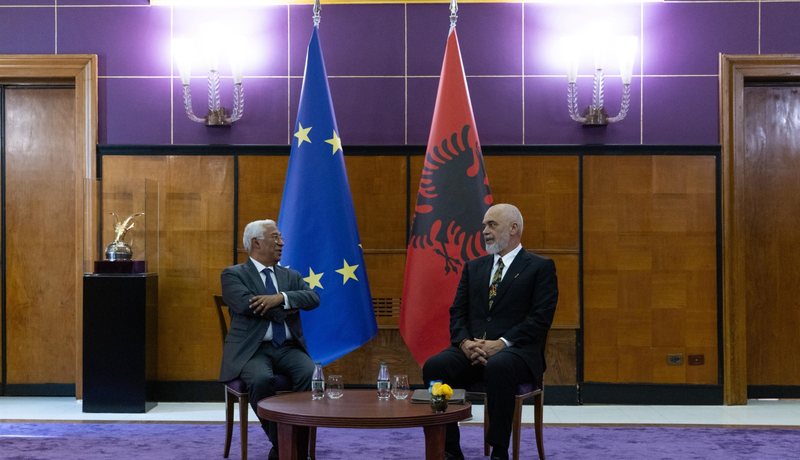
In February last year, Prime Minister Edi Rama, together with the governor of the Bank of Albania, announced a scheme that he said would be a great success story for supporting agriculture. It involved the opening of a sovereign-guaranteed financing line, where farmers would receive loans at 2 percent interest from banks and the state would guarantee up to 70 percent of the principal.
"Today we crown it in the most encouraging and optimistic way, with the BoA's decision to open a new financing line with a focus on agriculture and the agreement between the central bank and the second-tier bank, in function of projects. This is a qualitative leap, very promising for the sector and the country," said Rama.
According to the plan announced by the head of government, the credit line would be up to 250 million euros. The government's decision to open the scheme was approved in July.
"The loan is fantastic at 2%, the loan at 2% is really fantastic with 70% of the guarantee on the collateral, which is something very valuable for you," the prime minister said with great enthusiasm, adding that this instrument could reach up to 1 billion euros.
But the words of the head of government quickly caught wind, as often happens with bombastic promises. The scheme failed. Official data from the Bank of Albania show that last year, credit for agriculture not only did not expand as dramatically as the prime minister promised, but it actually decreased.
According to the BoA, last year banks provided a total of 26.4 million euros in loans to agriculture, down from 27.2 million euros in 2024. Meanwhile, the 1 billion euro tales that the prime minister told farmers during the electoral campaign turned out to be a hoax.
Meanwhile, the sector, underfunded from all directions, whether from budget support or bank loans, continues to shrink at an unstoppable pace, experiencing one of the longest and deepest crises in history, as agricultural production has declined for dozens of quarters in a row.
Editorial