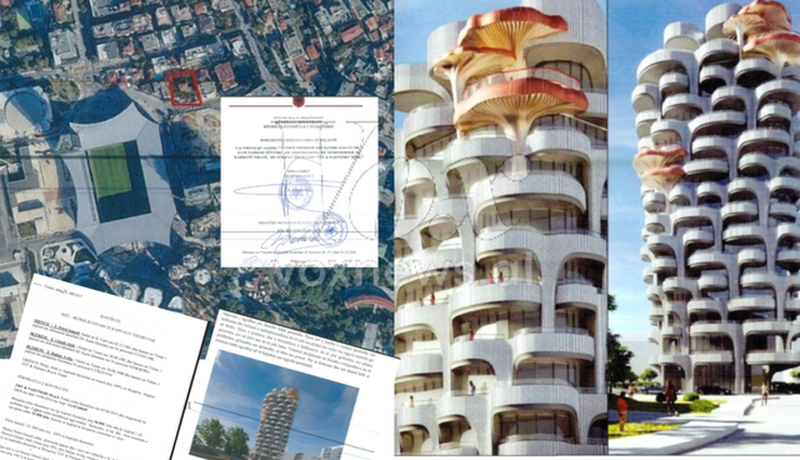
After a series of consecutive failures, five times in total, the calls for the development of the Cadastre Tower (Lift Tower) have entered a new phase: for the first time, the Albanian Investment Corporation has changed the basic criteria of the competition, reducing its tax share in the construction area from 45% to 40%. The move comes in an attempt to make the project more “attractive” for private parties, after several unsuccessful reopenings.
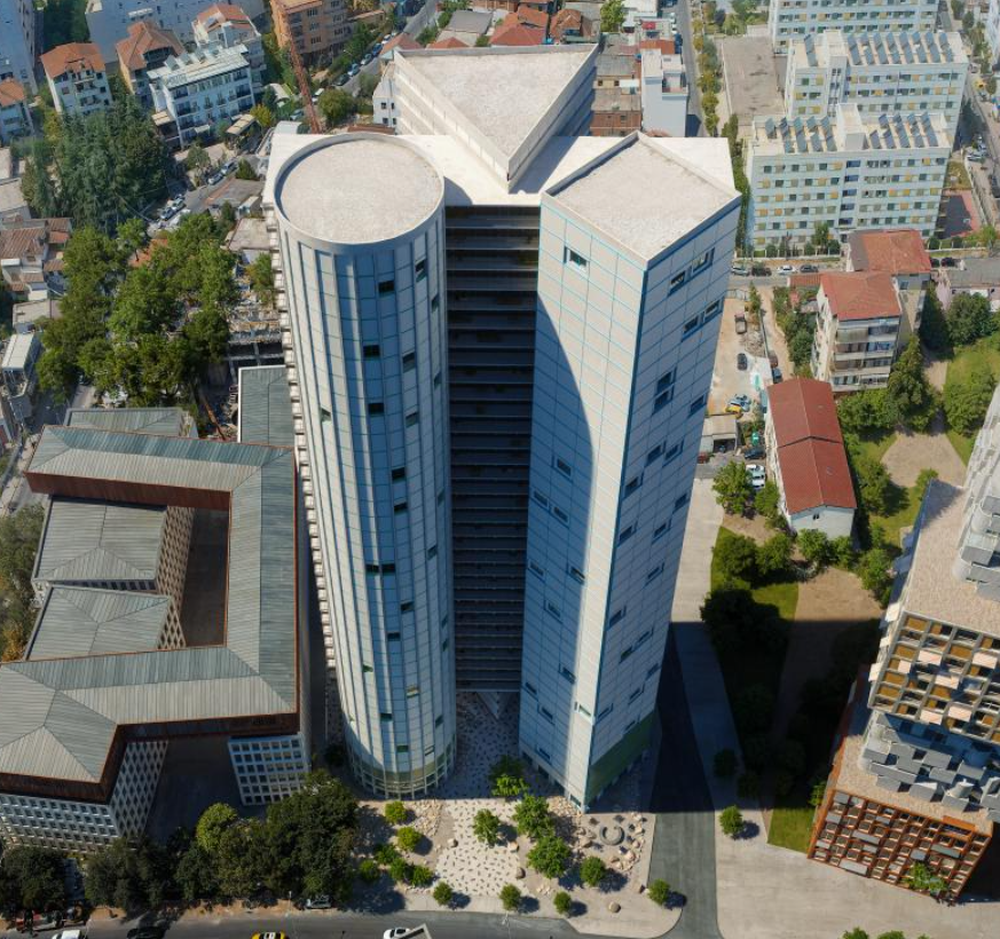
Ekofin.al reported on Monday about the reopening for the sixth time of the call for the 40-story tower that is expected to be built on “Muhamet Gjollesha” Street, near the Faculty of Civil Engineering. But a detailed analysis of the competition documents shows that the change in criteria goes beyond a technical adjustment: it translates into a concrete concession of public interest in favor of the private developer.
What has fundamentally changed?
In previous documents, consulted by Ekofin.al, the basic evaluation criterion was 45% of the surface area for the Corporation, on which the bids competed. In the new call, the minimum threshold drops to 40%, while the winner is declared the bid that offers the highest percentage on this basis. Practically, the Corporation accepts 5% less construction surface area in a building with a considerable volume – a 40-story tower – just so that the competition does not fail again.
This is a new precedent for calls of this nature. In economic terms, 5% of such a development translates into tens of thousands of square meters potentially lost to the public interest, especially when it comes to a high-value urban area.
A favor for the private sector, a cost for the public
The argument of “attracting investors” may seem pragmatic in the short term, but in essence it transfers value from the public to the private. In a project like the Cadastral Tower, which aims to house public functions and serve as an urban reference, reducing the public percentage raises serious questions about the balance between state and private interest.
If a competition is saved by lowering the public standard, the danger is clear: precedent. Tomorrow, any difficult project can be "solved" with the same formula, gradually eroding public interest in strategic urban developments.
What does this signal for the market?
For the market, the signal is twofold: on the one hand, the Corporation shows flexibility to close a protracted process; on the other, it publicly admits that the previous criteria did not work. The question that remains is whether the reduction from 45% to 40% will be enough to bring in bids and close the process this time or will we see another round of reopening with other concessions.
Editorial