Although the government trumpets it as its greatest success, the International Monetary Fund warns that the growth of tourism is setting a trap with long-term consequences for the Albanian economy: that of low productivity.
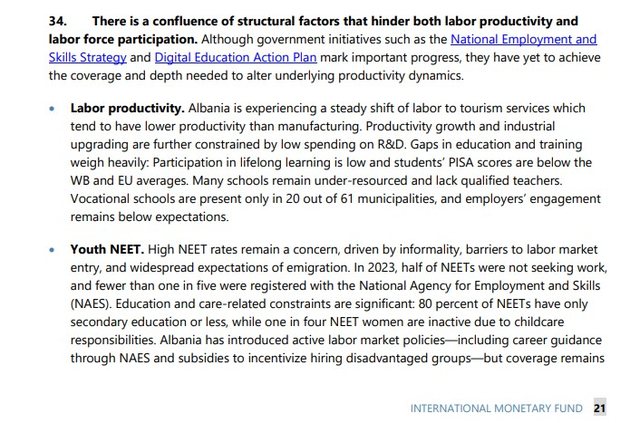
"Albania is experiencing a continued shift of labor towards tourism services, which tend to have lower productivity than manufacturing," the IMF says in its latest report on the Albanian economy.
Albania is experiencing a problematic structural change in the labor market, where one sector with low productivity is being replaced by another with low labor productivity.
For two decades, a large part of the workforce was employed in the garment sector with minimum wages and no potential for productivity growth. But now that garment manufacturing is heading for extinction, it is being replaced by another problematic sector in terms of labor productivity. This is tourism.
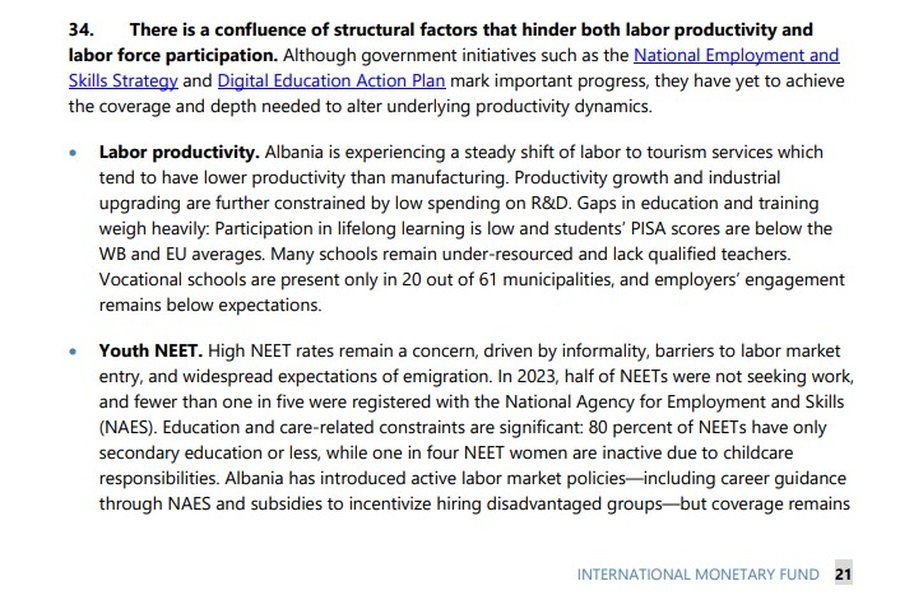
But tourism is not the only problem why the Albanian economy cannot travel fast. Productivity growth and industrial improvement are further limited by low spending on Research and Development.
"Gap in education and training is a major burden. Participation in lifelong learning is low and student scores in PISA are below
the Western Balkans and European Union averages. Many schools remain underfunded and lack qualified teachers. Vocational schools are present in only 20 out of 61 municipalities, and employer engagement remains below expectations," the IMF notes.
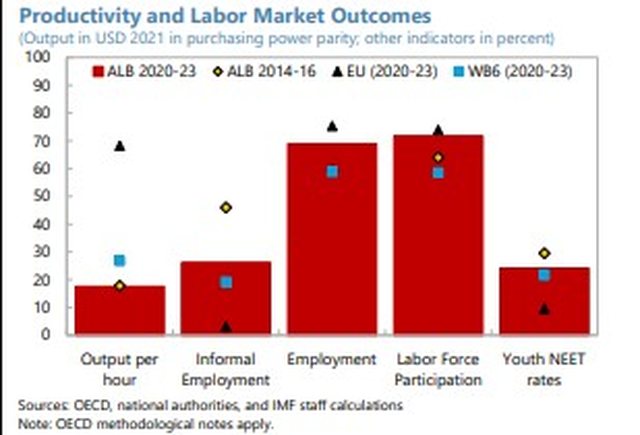
Official data show that currently the annual output of a worker in Albania is on average below $20,000 in purchasing power parity terms. The average of neighboring Western Balkan economies is 50 percent higher, at around $30,000 per worker, while in the European Union, this indicator is almost $70,000.
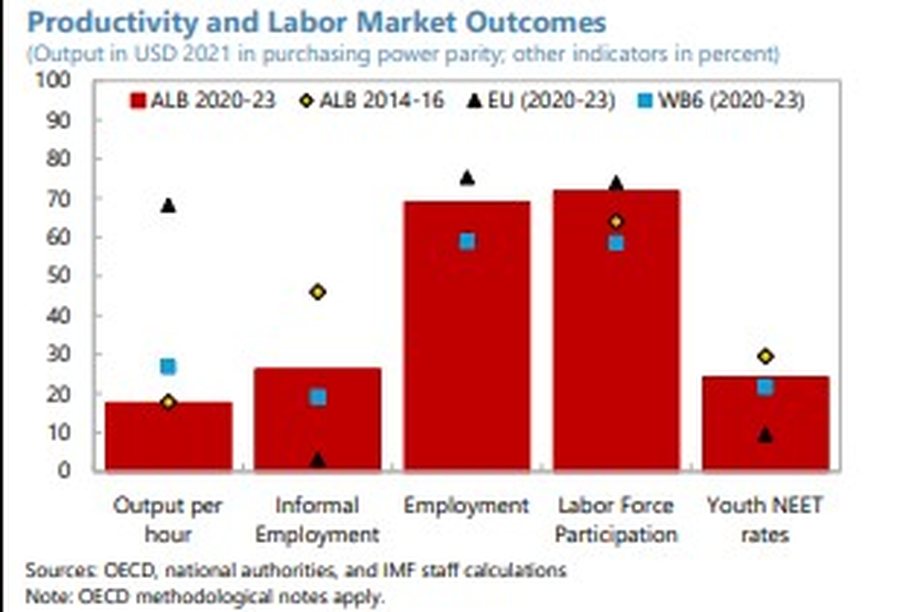
This mix of factors is fatal to productivity growth and well-being. The concentration of the economy in sectors with low labor productivity, in addition to dictating low wages for a large portion of workers, inhibits economic growth by keeping the economy hostage to the low-income trap.
Editorial