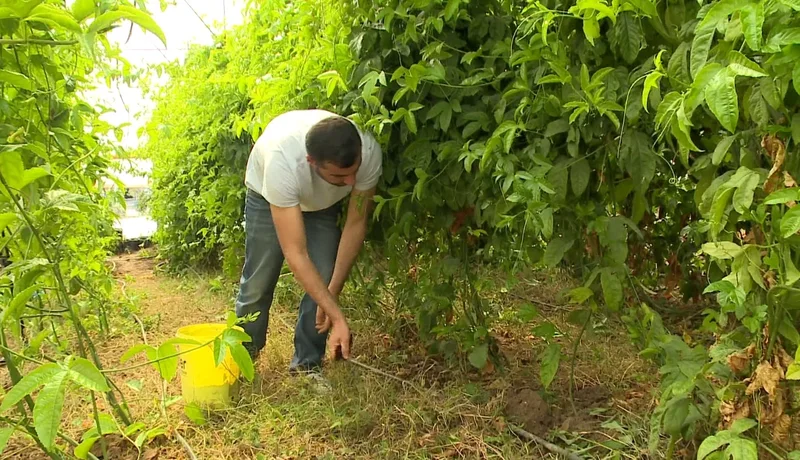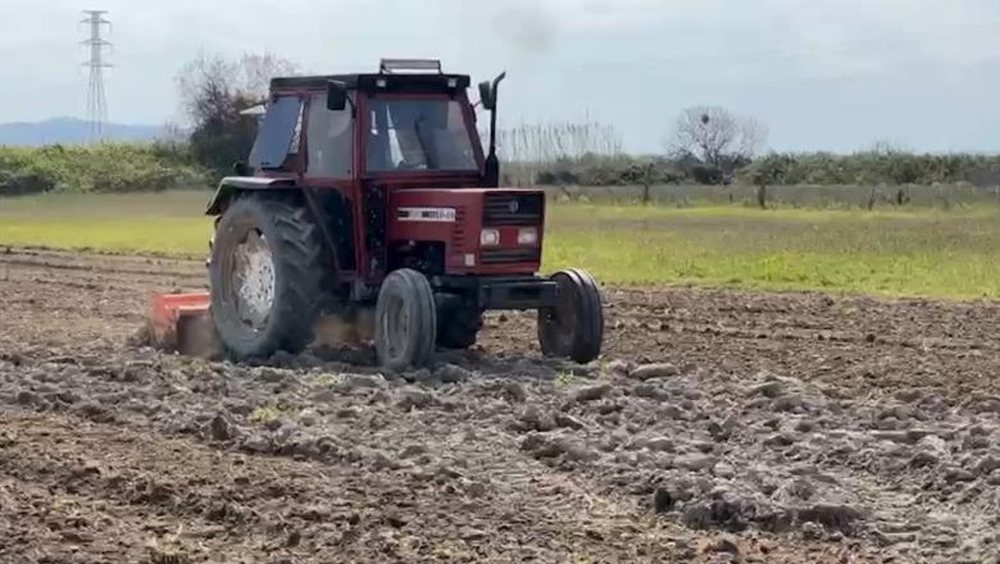
The sudden increase in oil prices has hit the agricultural sector hard. The first to feel the effects were small farmers in Divjaka and Fier, who cannot afford to buy oil for plowing and milling the land.
"Ploughing cost 20 thousand lek/dyne, it was 17 thousand. Milling cost 18 thousand/dyne. I bought oil for 214 lek/liter for the Zetor," Ruzhdi Veliu, a farmer in Divjaka, told Report TV .
"I buy oil for 214 lek/liter. Red cabbage is dried in Zetor because it is not sold. Costs have increased significantly and vegetable prices remain low," says another farmer, Thoma Dhori.
Small farmers say they do not benefit from the subsidy scheme, as the state provides excise-free oil only to those who have over 1 hectare of land.
"I only get the oil subsidy for my 1.5 ha of land, but I also have 40 ha of land rented, but I don't get the subsidy because I don't have the certificates for the land I rented and I end up with a deficit. This is not help for me; agriculture has gone to zero," says Vilson Sika, a farmer in Fier.
But the rise in oil prices is not the only problem for farmers. In parallel, they are also facing double-digit increases in the prices of chemical fertilizers and other agricultural inputs.
The Strait of Hormuz, effectively blocked by Tehran, carries about 30% of globally traded fertilizers, and Gulf producers are major suppliers of ammonia and urea, according to the UN Food and Agriculture Organization.
Bank of America warns that the conflict threatens 65% to 70% of global urea supplies, and prices have already risen by 30% to 40%.
Unlike fuel, fertilizers do not have strategic reserves. However, some countries are more exposed than others.
In the Albanian market, chemical fertilizer prices have already increased by 30 percent compared to the beginning of the war in Iran, while the increase is expected to continue. This will further hit the collapsed domestic production, as farmers are already in great economic difficulties and hit by high production costs.
Editorial