In less than ten years, the water and sewerage sector has been reorganized three times, with results that have been poor from a financial point of view, while the government relies on vague concepts to declare successes.
In its 2014 report on the state of the water supply and sanitation sector in the country, the supervisory authority, the Water Regulatory Authority, identified network losses as the sector’s main concern. Losses in the water distribution network are measured as the simple difference between the amount of water introduced into the distribution network and the amount of water billed to customers.
“Water without revenue is an indicator that has remained at not very good levels for at least the last three years and constitutes the main concern in the sector,” the WRA report of that year states. “The level of losses in the sector is 67.4% of the water produced. This shows that most of the water produced is lost, therefore it does not generate revenue,” the report continues.
A decade later and hundreds of millions of euros spent by taxpayers, in the form of supply tariffs paid or in the form of subsidizing investments in this sector through general taxation, losses in the distribution network fell to 61%, a negligible reduction considering the long time that has passed (a decade), and the fact that the system has been reorganized twice in the meantime: the first time, in 2015, when the creation of enterprises based on new municipalities emerging from administrative and territorial reforms was ordered, and the second time, in 2021, when it was ordered that water utilities be returned under the ownership and, effectively, under the control of the central government through the Ministry of Infrastructure and Energy.
During the implementation period of the first reform, i.e. between 2014 and 2021, network losses fell from 67 to 65%. while during the second reform period they fell from 65 to 61%.
However, the indicator of losses in the network or water spilled without revenue is one that the Regulatory Entity itself says should be taken with reservations, since all data is reported by the water utilities themselves, the reliability of whose reports leaves much to be desired. Consequently, the assumption is that the real losses are likely even greater than those declared.
Water without revenue is a multifaceted problem, both from the point of view of the quality of service provision and from the point of view of financial costs. In water utilities in which water is distributed thanks to the gift of gravity, as is the case of the Tirana water utility, losses in the network do not enable the supply of pressure to the consumer and push citizens to invest themselves to maintain tanks and pumps, which of course cost citizens money, but not directly to the water utility. In Tirana, losses were 62% last year, that is, for every 100 liters of water discharged into the network, 62 are lost and 38 are used and paid for by the consumer.
In the case of water utilities that require mechanical water lifting, the cost of losses is extraordinary. The Durrës water utility, for example, which receives water with pumps in the Fushë-Kuqe area, is forced to pump, and consequently spend energy, not only to supply water to consumers, but also to supply the enormous amount of water lost in the flow. Durrës in 2024 had losses of 67.3%. This means that for every 100 liters extracted from the depths of the earth and processed for purification, 67 liters are lost and 33 liters are sold to consumers.
Losses in the network also mean that in all water supplies in the country, with few exceptions, the water supplied is at risk of being unsafe for human consumption.
Against this reality, the Ministry of Infrastructure and Energy, Belinda Balluku, who has been in the position of majority owner of the overwhelming majority of water utilities in recent years after the "second reform", stated that the country today has "56 urban areas" with 24-hour water and "98 rural areas" as well, but did not provide any definition of what an urban area is and what a rural area is, nor did she explain the number of people served.
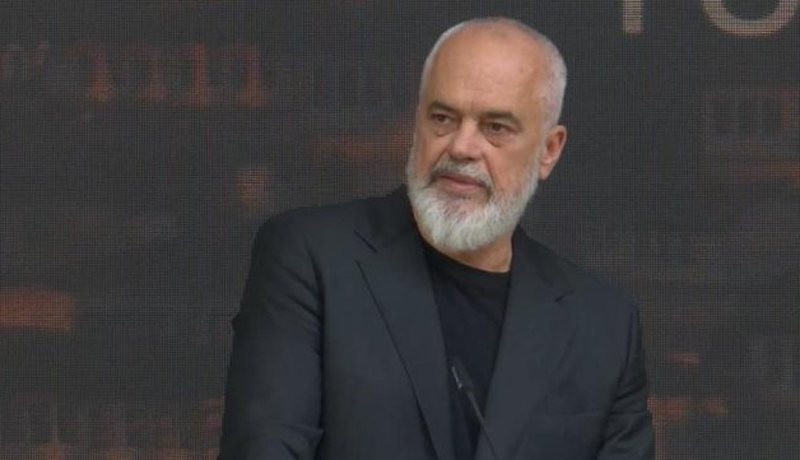
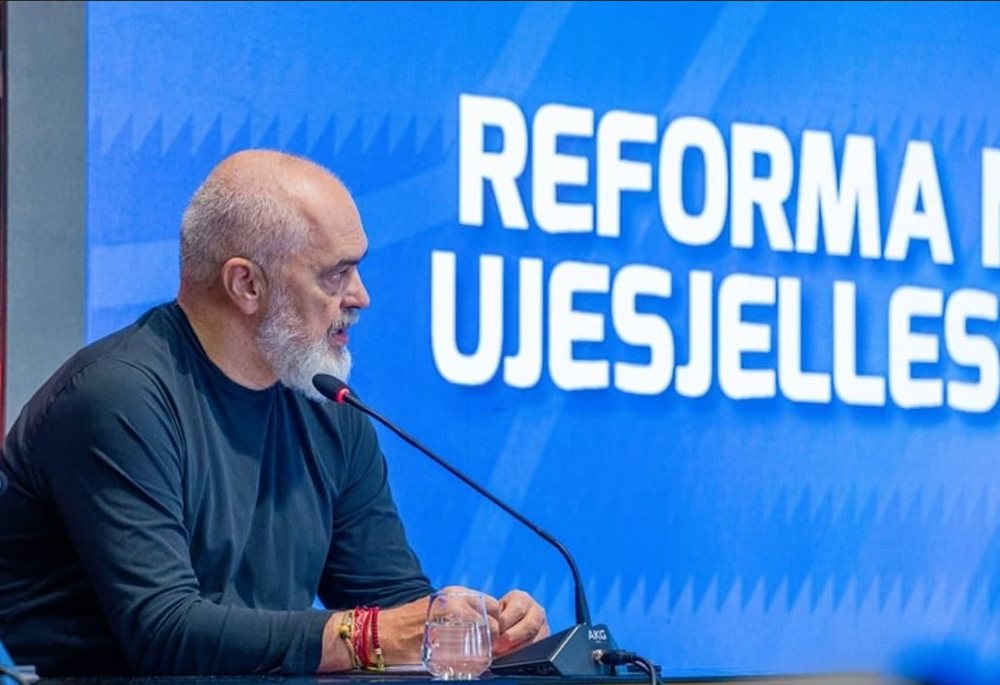
Meanwhile, Prime Minister Edi Rama spoke about political hiring in the water supply sector, but without taking any responsibility.
Reducing network losses seems technically a simple matter. Burst pipes need to be repaired, and while repairs are indeed expensive, the cost of repairs is offset by the reduction in losses. Meanwhile, water utility staff are normally easier to manage, as reducing them does not require capital expenditure.
The WRA report of 2014 states: “Reducing the level of losses, increasing the level of metering, reducing redundant staff and increasing work efficiency are urgent objectives of companies that lead to reducing ineffective expenses and increasing revenues.”
A decade later, it seems nothing has changed.
Editorial