The Albanian economy grew by 3.79 percent last year, but INSTAT accounts show that two-thirds of the growth came from government expansion, while the rest came from construction and real estate.
More specifically, of the 3.79 percent increase in Gross Domestic Product, 1.75 percentage points came from public administration, while another 1 percentage point came from net taxes. Construction and real estate activities together added another 1.1 percentage points to national output.
Meanwhile, other branches of the economy have not been able to compensate for the decline in two vital production sectors, agriculture and industry, which contracted again for the umpteenth year in a row, signaling a deep crisis in the manufacturing sector.
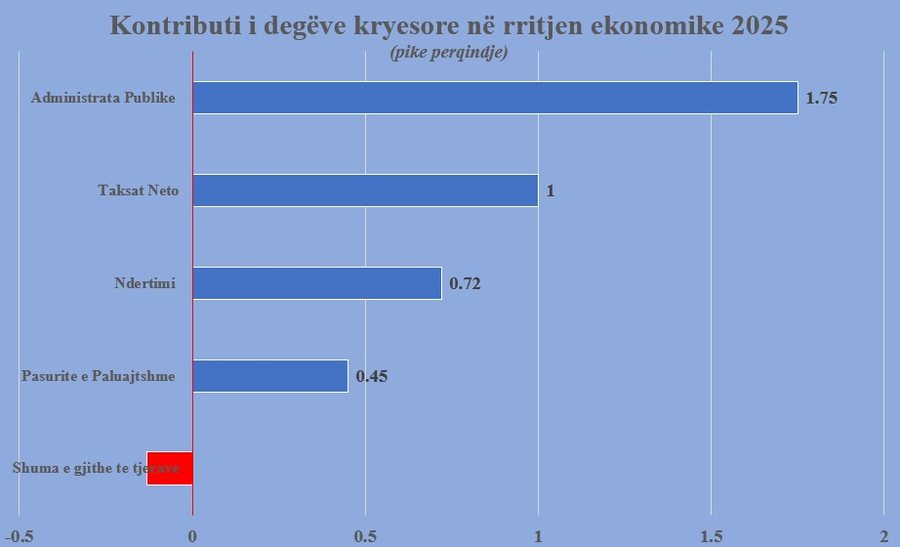
Economic growth structure 2025
This is one of the most problematic growth structures that the Albanian economy has ever recorded in history, raising serious concerns about its denaturation. The increase in production in the Public Administration branch is directly linked to the increase in wages, the effects of which peaked in the first and second quarters of last year, just before the elections.
Net Taxes on Products is another component that represents the government's hand in the economy. It reflects the increase in revenue that the government collects from taxes, which in the production method is added to Gross Value Added to give the economic growth figure.
With a weight of 1 percentage point, net taxes became the second largest contributor to the expansion of gross domestic product last year, although calculating the contribution of taxes to National Product is problematic because INSTAT does not take into account changes in statutory tax rates as a result of fiscal policy.
But despite this, two branches that represent the government's share of the economy, public administration and net taxes, have together contributed almost 73 percent or two-thirds of economic growth. The remaining part, or one-third, has come from construction and real estate.
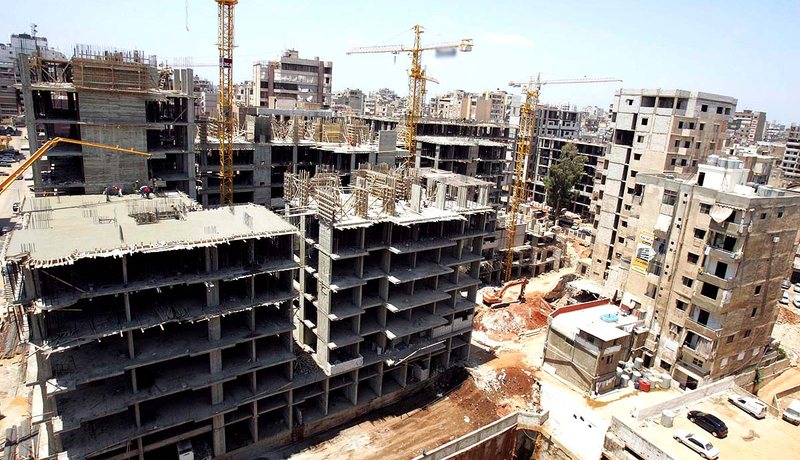
In short, Albania's economy grew last year only from the government and concrete, while the private sector beyond construction is practically floating in recession. If you remove the state's contribution to last year's economic growth, the Albanian economy results in only 1 percent growth, while if you remove concrete, then the entire rest of the economy is in negative growth.
So government and concrete. This was the structure of Albania's economic growth last year. Agriculture, industry and especially manufacturing, which are the most important sectors of the economy, are all in an unstoppable dive, for several years now.
The Albanian economy is already resting on shaky foundations. The government cannot significantly increase wages and pensions each year to keep the country's economic growth high, as this would push budget spending and public debt out of control. On the other hand, construction and real estate cannot guarantee sustainable growth, as not only cannot continue to expand at an infinitely fast pace, but they also do not add productive capacity to the economy.
Therefore, if the productive sector of the economy continues to drift into recession, the Albanian economy will cease to pulsate, despite the advertised growth in tourism.
Editorial