A 390-acre land area in Velipojë, registered in the name of a 90-year-old woman, was acquired by nephew Pëllumb Gjoka and his companies, while the government granted him strategic investor status to realize the "Silver Sand Resort" project.
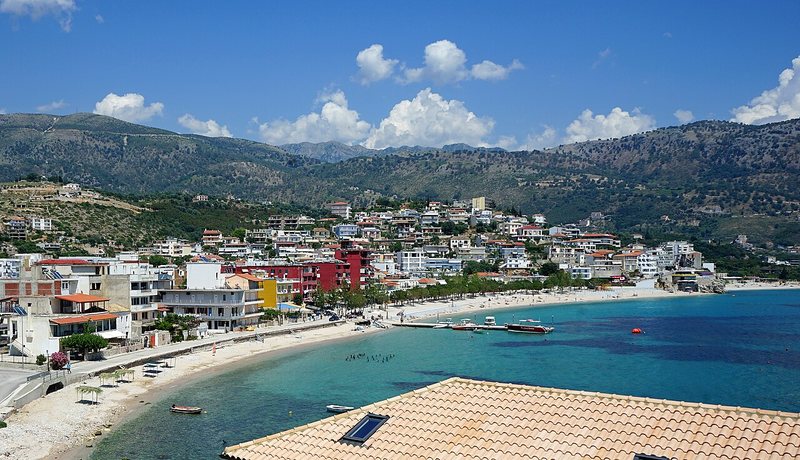
On the coast of Velipoja, a 390-acre plot of land in the village of Pulaj was registered in the name of a 90-year-old woman.
Despite her children being unaware of the property, a power of attorney for Ardian Beci initiated legal proceedings at the Property Restitution Agency and the courts in January 2012. After the property was certified in her name, Drandeja issued a will leaving the property to her nephew Pëllumb Gjoka, who through contracts signed by Beci began alienating the property to other beneficiaries, including companies linked to Gjoka and former MP Agron Çela.
The alienation process was investigated by the Shkodra Prosecution Office in 2022, which suspected document forgery. However, its expertise showed that the documents were not forged and the criminal proceedings were dismissed. Meanwhile, investigations by the Special Prosecution Office (SPAK) concluded that the documents were forged, highlighting the involvement of notaries and actors connected to Gjoka's companies.
In July 2021, land on the coast of Velipoja was announced as part of the “Silver Sand Resort” project by the Imperial Group of Pëllumb Gjoka, as a strategic investor. The project included the construction of two 5-star hotels, 23 villas and 204 apartments, worth 52 million euros. Despite the concerns of the Municipality of Shkodra and the legal criteria, the government and the Strategic Investment Committee approved the project.
Economic and legal analysts point out that the alienation of property and the status of strategic investor were used to legitimize funds of dubious origin. The Law on Strategic Investments, while on paper aimed at the development of the productive and infrastructure sectors, in practice favored coastal tourism and politically connected investors. The DASH 2025 report confirms that money laundering in Albania is often linked to drug trafficking, government contracts, and real estate investments, allowing such investments to function as schemes to legitimize dubious capital.
The 90-year-old woman who became the owner in the papers,
Drande Hotaj, born in Mali i Jushi and residing in Bajzë, was recognized by the Shkodra Court as the owner of an area of 390 dunyas (39 ha), in the village of Pulaj, on the Adriatic coast.
The 91-year-old has barely left her home and none of her 4 children were aware that she owned such a large property by the sea, but legal proceedings have begun after a power of attorney she issued for Ardian Beci, in January 2012.
Immediately after this power of attorney, Beci is the one who, on behalf of the 90-year-old, initiated procedures at the Property Restitution Agency, but also the opening of court proceedings.
6 months after being "declared" the owner by the Shkodra Court, Drandeja issued a will on December 20, 2012, stating that she bequeathed all the property acquired in the village of Pulaj to her nephew, Pëllumb Gjoka.
The claims of the Property Restitution and Compensation Agency, that there was insufficient evidence to prove the 91-year-old's assets, were rejected by the courts and Drande Hotaj's ownership was certified by the Supreme Court on May 18, 2017.
But the 91-year-old never enjoyed the property that was registered in her name. The property, once registered in the mortgage, was sold through contracts executed by Beci. Initially, he sold it to the company "Xhenis-Sh" sh.pk, a company linked to former Socialist Party MP Agron Çela, an area of 61,470 m², for a value of 9 million and 30 thousand lek.
He signed a second contract with Pëllumb Gjoka's "Imperial Construction" company, where he sold an area of 113,500 m2 for 17 million lek. While the rest of Dranda's property was registered in the name of Kolë Gjoka, through a donation contract that Beci again signed in Dranda's name.
The registration of a significant area of property in the name of the 91-year-old and its alienation became the subject of an investigation by the Shkodra Prosecutor's Office in 2022.
The local prosecution suspected that ownership was obtained through forged documents, but despite data raising doubts about the authenticity of the documents used during the process of recognizing and returning the property, the case was dismissed.
Expertise conducted by the prosecution showed that the archival documents used during the process of recognizing and returning the property were not falsified.
At that time, the Shkodra prosecution was headed by Xhevahir Lita and subsequent investigations showed that at this time there were frequent communications between him and Pëllumb Gjoka on the "SkyECC" application.
"In one of the communications, there are four photographs of a document that is very similar to that of that expert report, in addition to the involvement and commitment of those citizens to compromise the conclusions of this report. In this expert report, the conclusion was reached that the archival documents used during the process of recognizing and returning the property were not found to be falsified," the investigative file states.
In July 2022, the Shkodra Prosecution Office requested the termination of the criminal proceedings and no data is provided on the status of this decision, while in the other two acts carried out by the Special Prosecution Office, an opposite conclusion was reached.
According to the expertise conducted by SPAK, those documents are forged. Likewise, the investigations revealed that the notary who drafted the will and donation acts, as well as the special power of attorney, actually worked for companies linked to Gjoka.
Strategic investor
The Shkodra Prosecution Office had not yet closed the investigations into another property alienation on the Velipoja coast, when in July 2021 the Albanian Investment Development Agency declared Pëllumb Gjoka's company a "strategic investor".
It was on Drande Hotaj's land, through the Imperial Group company, that the "Silver Sand Resort" project would be realized, an investment worth 52 million euros, which includes an area of 11.3 hectares, with 1.4 hectares of construction: 2 5-star hotels, 23 villas of 2–3 floors each, and 204 apartments.
The project has also received the signature of the chairman of the Strategic Investment Committee, Edi Rama. The findings of "shteg.org" show that in the procedures that the government followed in approving the resort, not only the investigations of the local prosecutor's office were ignored, but also the arguments of the Municipality of Shkodra, which rejected the project.
"The proposal for this strategic investor is contrary to the general local plan of the Municipality of Shkodra," - states a letter from the former mayor, Voltana Ademi, according to which the only permitted constructions are those in the service of preserving and maintaining the current situation.
For economic expert Armand Mala, the alienation of properties is a process that accompanies the development of tourism projects, transforming into a favorable scheme for money laundering.
"Resort development is often accompanied by land use changes, profit from public or coastal property, and an immediate increase in the value of the investment. These elements make the scheme even more favorable for money laundering, as the increase in the value of the asset financially justifies the capital invested, regardless of its initial origin," expert Armand Mala tells "shteg.org."
As part of the investigations launched in January 2023 for the criminal offenses of document forgery and money laundering, in October the Special Court approved the seizure of 390 thousand m² of forest, located in Pulaj-Plazh of Velipoja, in Shkodra.
Pëllumb Gjoka, the company "Imperial Group" and, as an interested party, the company "XHENIS-SH" sent the case to the Constitutional Court, where they opposed the seizure measure, arguing that it violates the principle of proportionality and constitutes an extreme intervention.
According to them, the legal owners have been effectively stripped of all rights to the assets, while the Imperial Group company has been prevented from developing the property based on a permit approved by state authorities. They claim that the economic damage caused is excessive and unjustified, especially in relation to the public interest in developing tourism in the area.
For its part, the Special Prosecution Office has opposed these claims, emphasizing that this is a temporary asset protection measure, which can be verified and reviewed at any stage of the proceedings.
According to SPAK, the claim that Pëllumb Gjoka has no connection to the seized assets is unfounded and contradicts the evidence administered during the investigation, which was also presented in the constitutional review of the case.
The investigation also includes evidence that casts doubt on the way in which legal acts were carried out.
Drande Hotaj's daughter has stated that her mother could not read, write or sign and that the most she could do was put her finger on the paper. She has claimed that the family was unaware of the existence of a property of hundreds of dunyas in Velipojë, which resulted in the records of 1935, but which in practice had been owned and administered for years by Pëllumb Gjoka.
According to the Prosecutor's Office, the connections between the proxy representatives, notaries and beneficiary companies are not accidental. The persons who carried out actions on behalf of the formal owners turned out to be employees of the company "Imperial Group", where Gjoka owns the majority of the shares.
Also, the communications discovered on the SkyECC application between Gjoka and the former prosecutor in the case suggest attempts to influence the conclusions of a graphic expertise act, raising serious doubts about the integrity of the investigative process and the legality of the property acquisition.
In May 2025, the Constitutional Court rejected the request of Gjoka and the company "XHENIS-SH" to lift the seizure measure.
In a response, representatives of the company "XHENIS-SH" state that the property they purchased has no connection to the development of the resort and according to them, the purchase of the land was legal.
""XHENIS-SH" has purchased the land for which information is requested according to regular legal procedures through notarial acts and bank transfers, a process legally certified by mortgage offices", - company representatives explained to "shteg.org".
Meanwhile, Gjoka's legal representative at the Constitutional Court, regarding the seizure of properties, Gurali Brahimllari, did not answer questions about the findings of "shteg.org".
For economic expert Armand Mala, strategic investments are being used as an instrument that often ends up in money laundering.
"The status of strategic investor, in principle, is conceived as an instrument to attract serious capital, to develop priority sectors of the economy and to accelerate projects of public interest, such as tourism or infrastructure. However, the way in which this status has been implemented in practice, especially in the field of construction and tourist resorts, has raised real concerns regarding the risk of its use for money laundering," says economic expert Armand Mala for "shteg.org".
In May 2015, the Socialist Party government quickly passed the Strategic Investment Law, a transitional instrument that promised to boost domestic and foreign investment in key sectors of the economy, from energy and mining to agriculture and fishing. The law offered fiscal, administrative, and procedural incentives, public land for investors certified as “strategic,” and the possibility of state intervention to expropriate private property. Decision-making was centered in AIDA and the Strategic Investment Committee, headed by the prime minister and several ministers.
On paper, the law seemed like a shortcut to attracting foreign capital and expanding the manufacturing economy. In practice, things took a different turn. Only two foreign investments were realized – a car parts manufacturer from Korea and a yacht port from an Arab company.
The agricultural sector, which the law aimed to develop, was only sporadically included, while coastal tourism received more than 80% of the benefits, often in protected natural and archaeological areas.
AIDA's procedures remained non-transparent, often guided by an “OK from above” that implied political approval of investors, regardless of their financial capabilities or experience.
Legal experts point out that the law has functioned as an instrument of clientelism and political favoritism, disregarding competition, ownership standards, and the initial vision for long-term strategic development.
"In many cases, the process of verifying the source of capital and the real ownership structure of companies that benefit from strategic investor status has been unclear or not fully transparent to the public. This creates space for entities with capital of dubious origin to 'legitimize' money through large construction projects, especially in high-value tourist areas," says Mala.
The US Department of State (DASH), in its 2025 International Narcotics Control Strategy report, highlights that Albanian crime is laundering drug money in the construction of high-rise buildings and the purchase of real estate in Tirana and other areas, especially on the coast.
“Most money laundering in Albania is related to drug and human trafficking, government contract fraud, tax evasion, and smuggling. The largely cash-based economy, weak border controls, and weak customs enforcement facilitate a black market for smuggled goods. Money sent from abroad (remittances) and investments from abroad sometimes hide the sources of funds. Criminals launder proceeds through real estate purchases, construction projects, virtual assets, and business development,” the DASH report states.
Editorial