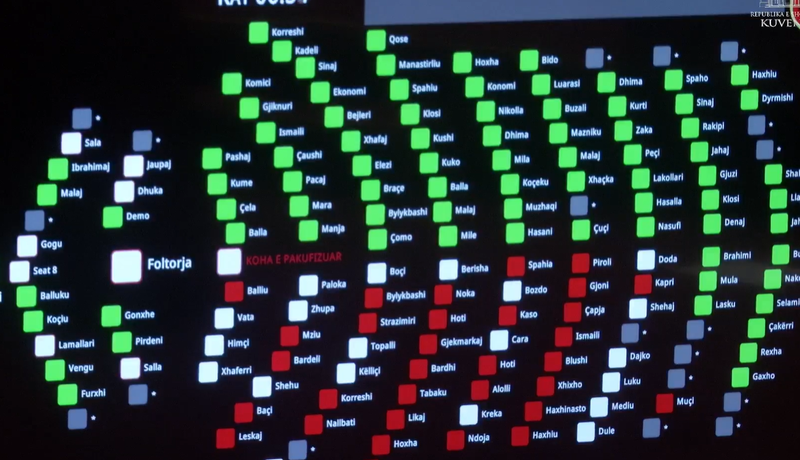
Former Minister of Finance, Arben Malaj, has commented on the fierce parliamentary debate regarding the issue of Minister Belinda Balluku, emphasizing that blocking institutions serves neither the opposition nor the democratic process.
In a television interview, Malaj underlined the importance of respecting the presumption of innocence as a fundamental principle of the rule of law.
According to him, the fact that an official is considered a defendant or under investigation cannot automatically be considered guilty. "We ourselves are discussing changes to the Criminal Code to give more importance to the presumption of innocence. The moment an individual is considered a defendant, this does not mean that he is guilty," Malaj said, adding that he does not defend anyone and does not accuse anyone personally.
He criticized the way the parliamentary debate on the Balluku issue was raised, considering the opposition's demand for her arrest as an approach that "adds nothing to the political and institutional debate."
Malaj brought to attention the example of the opposition to incinerators, led by Jorida Tabaku, which he assessed as "very professional", implying that current debates should also follow the same standard.
"What if tomorrow a prosecutor who has the power to investigate another member of the majority or the opposition, what will happen? Will his removal be automatically sought by the government, parliament or local government? This is not the way it should work," he stressed.
Malaj argued that the focus of the session should be the budget and not shifting attention to other issues, appealing for not overloading the parliamentary agenda with debates which, according to him, do not accelerate either justice or the reform of institutions.
"The discussion should have been only about the budget. If they want, tomorrow or the day after tomorrow they can hold their political debates, but not block the work of parliament," Malaj concluded.
Editorial